





A Real Art Restoration Drama In Our Lab “If this story doesn’t shock you, then nothing will…. or at least you’ll shake your head and say, ‘What an unbelievable idiot and raise an eyebrow —
Fairly often we have special interest groups that have a “field trip“ to our Lab. We roll out the red carpet and enjoy showing them all the different kinds of projects we work on, how we use a black light (UV) how we use the stereo binocular microscope and we set up different displays to make the visit as educational as possible.
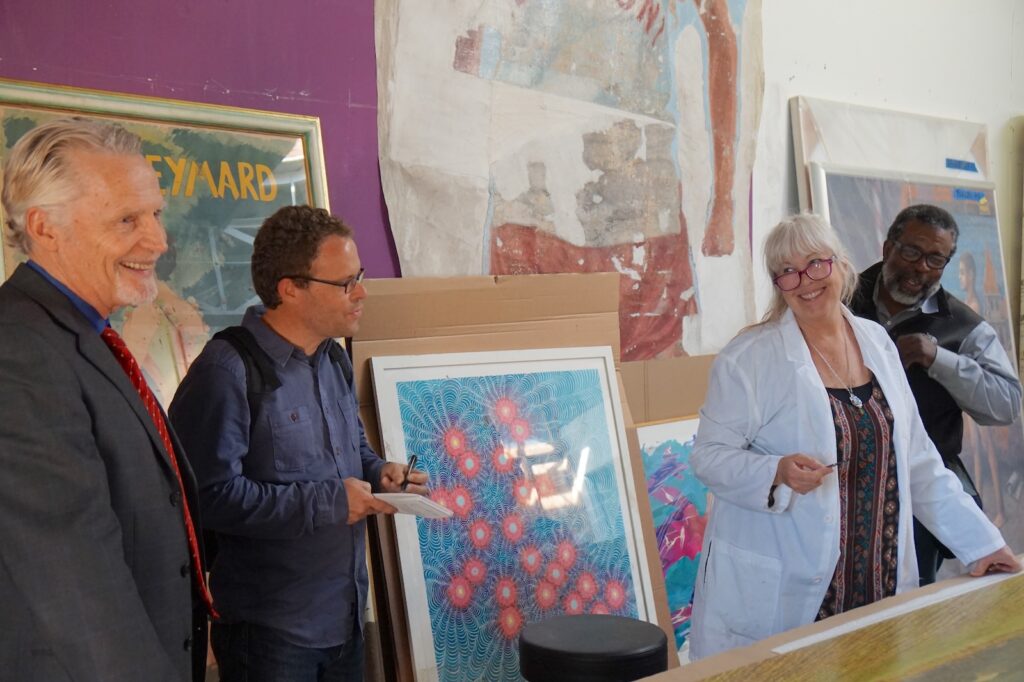
NY Times Tour at Fine Art Conservation Lab.com
What Happened When a Collector Brought His Vintage Painting of a Dutch Interior to the Lab
We also encourage the visitors to bring in artwork that they may have questions about that we can discuss with the group. We always get five stars reviews, and no one has ever been bored!
During one such visit, a man who collects old master paintings, brought in a small interior Dutch scene that was very nicely done. The first questions that usually come up in the question and answer moments are:
FAQ’s Common Questions We Hear During Lab Visits
How much is my painting worth?
How much does it cost to clean a painting?
How do you know if it’s worth restoring?
Can I clean my painting at home?
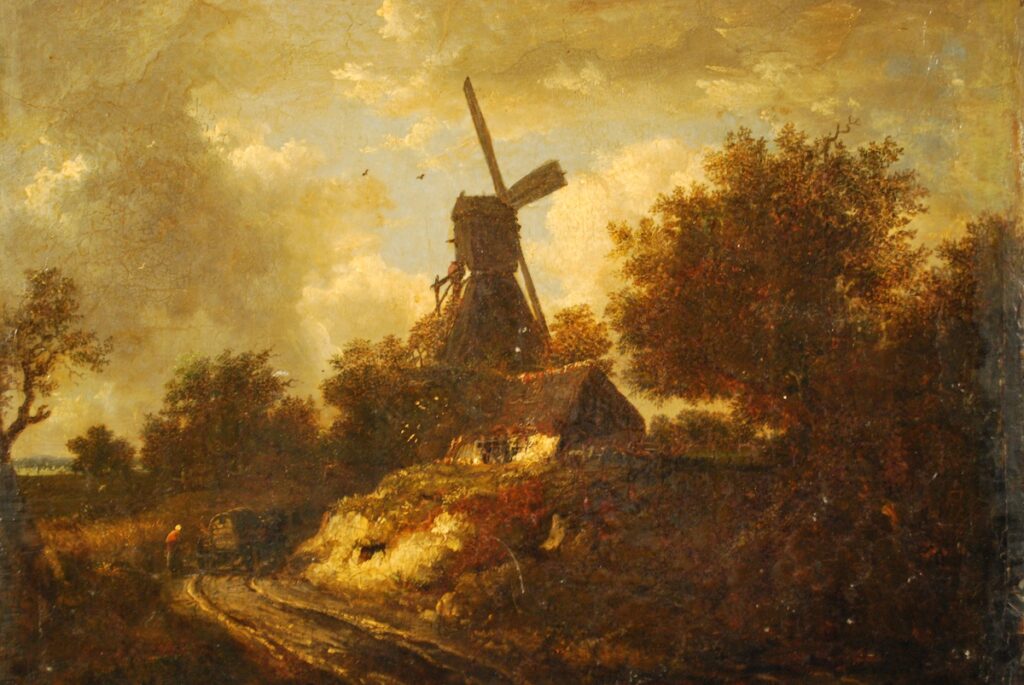
Dutch Old Master that begs for cleaning – not the painting related to this story
It’s unethical according to our professional ethics and standards for an art conservator to give an opinion about value. Even though the game of estimating appraisal values by uncertified art dealers and “restorers” is common, especially in Europe, there are many ways this practice is used to the disadvantage or manipulation of the client to sell the painting or to get the owner’s decision to have restoration work done.
Instead of offering my appraisal of the value, I can offer an opinion as to the comparative quality of the artwork based on artwork we’ve had come through the lab over the last 40 years and sometimes I give an opinion of the approximate value based on other paintings I’ve heard about from auction houses and dealers we work with, with a disclaimer.
After giving my disclaimer to the group in this story, I suggested that this very nice painting of an interior Dutch scene could be valued in the $35,000 range based on comparative quality and size we’ve seen. The owner didn’t seem surprised and then he asked if I could estimate what the cleaning cost would be.

Under magnification, conservators test solvents and adhesives for cleaning tests
The Microscope Demo: Showing How Careful Varnish Removal Must Be
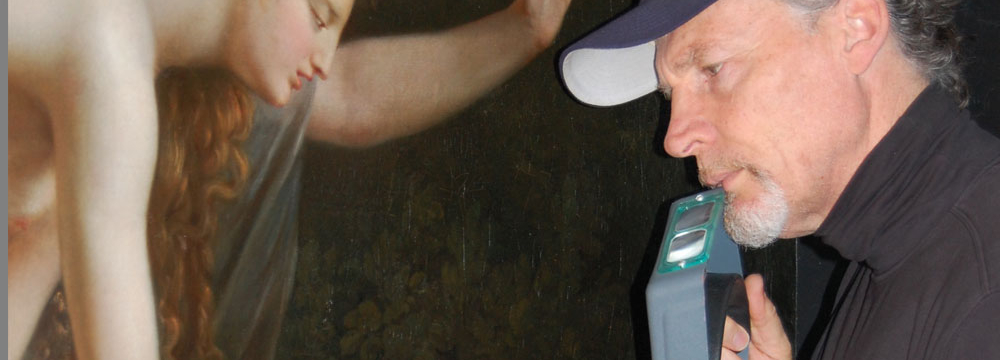
This was a good opportunity to show the attendees of the lab tour how we use the stereo binocular microscope to do tests for varnish removal without dissolving the original paint. This was an excellent example because, as I pointed out to the group, the original painting technique of this 19th century interior used varnish mixed in with the paint in order to get the beautiful transparency and find detail. I explained that the process of removing the yellowed varnish would have to be very careful done, making sure that any solvents used would not move or dissolve the original paint. FACL NEVER damages artwork while working on it.
I indicated to the group that the solvents I was using on the varnish removal test under the microscope we’re not necessarily the technique and solvent, I would use in the actual cleaning, which would probably take several hours to do.
The owner was very appreciative of the information and insights as I gave his painting back to him. He wrapped it back up, tucked it under his arm and left with it when the tour was over.
Two Weeks Later: When He Returned with the “Cleaned” Painting
About two weeks later, I got a phone call from the same owner that he would like to come and see me. As I was unwrapping the painting, he said that he had cleaned the painting and that he did it in about a half hour. My stomach immediate knotted up.
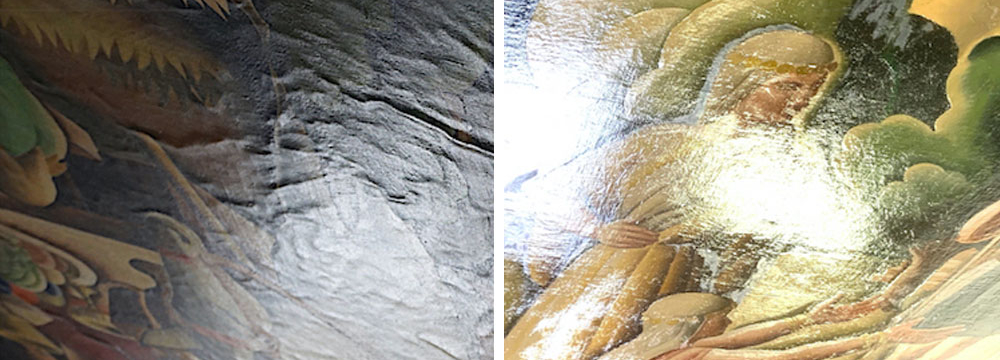
I was shocked to see that the entire painting had been badly damaged by dissolving the original paint, losing many many details and reducing what was a painting in perfect condition to a thoroughly “skinned“ damaged painting in every area of the painting, including the signature, which has been badly abraided by this Due-it-Yourselfer.
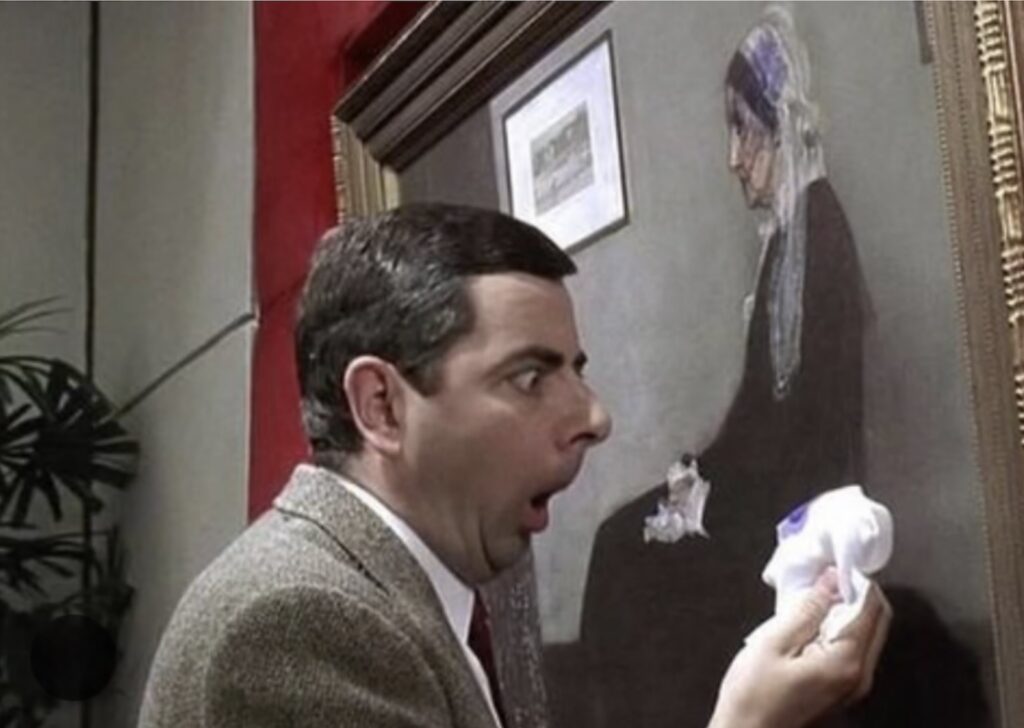
DIY Cleaning a painting
How A Prideful Attitude and the Wrong Solvent Destroyed a $35,000 Painting
I looked at the owner, incredulous and I said, Wow, you’ve ruined this painting!
He retorted. I did what you told me to!“
Trying to restrain my response, “I never told you how to clean this painting or even gave you suggestions!“
He justified himself, “Well, I saw the solvent you were using in the testing under the microscope and figured I’d try that.“
I accused him, “You wiped this with a rag and a solvent that was way too powerful, dissolved the paint and in the process you’ve wiped off details everywhere and removed the signature 80%.! You’ve taken a $35,000 picture and reduced it to trash!“
To that, the owner got angry, raising his voice telling me it was my fault the painting was damagedbecause I had told him the wrong things to use… and now I had to “fix it.”
My blood began to boil and I got fired up inside with his exceeding stupidity. I was not calm… on the inside but I was still contained on the outside. “Repainting this once beautiful painting does not restore the original quality and does not restore the artwork’s lost value! You have destroyed this painting, permanently.”
I told him to get out of the lab! I stepped towards him and he took a step back towards my front door. I told him that he was never to come back, never to call, and I was never to hear of him again!
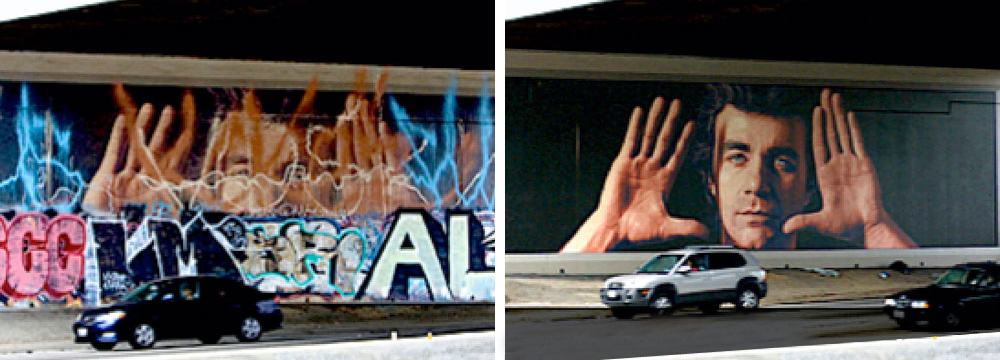
There was a 16th century art historian named Giorgio Vasari (1511–1574 who wrote Lives of the Most Excellent Painters, Sculptors, and Architects, the foundational text of Renaissance art history) that had the opinion that incompetent restoration had destroyed more art than all the volcanoes, floods, earthquakes and wars put together. This plaque of destruction of artistic and cultural items by Do-It-Yourselfer-Fix-er-Uppers obviously is not a modern-day problem.
His declaration sounds to me, that Giorgio may have been also (besides me) on a rant when he wrote that and I can’t imagine that he had a way to prove his statistic. But we often see, in our lab, the sad state of affairs with artwork that is loved and cherished that has been brutalized and reduced to a damaged whisper of something beautiful that used to sing soprano. One of the greatest offenders of this kind of tragedy occurs on family, history, items and ancestor portraits that are worked on or restored as an artist-friend of the family who is going to save them some money.
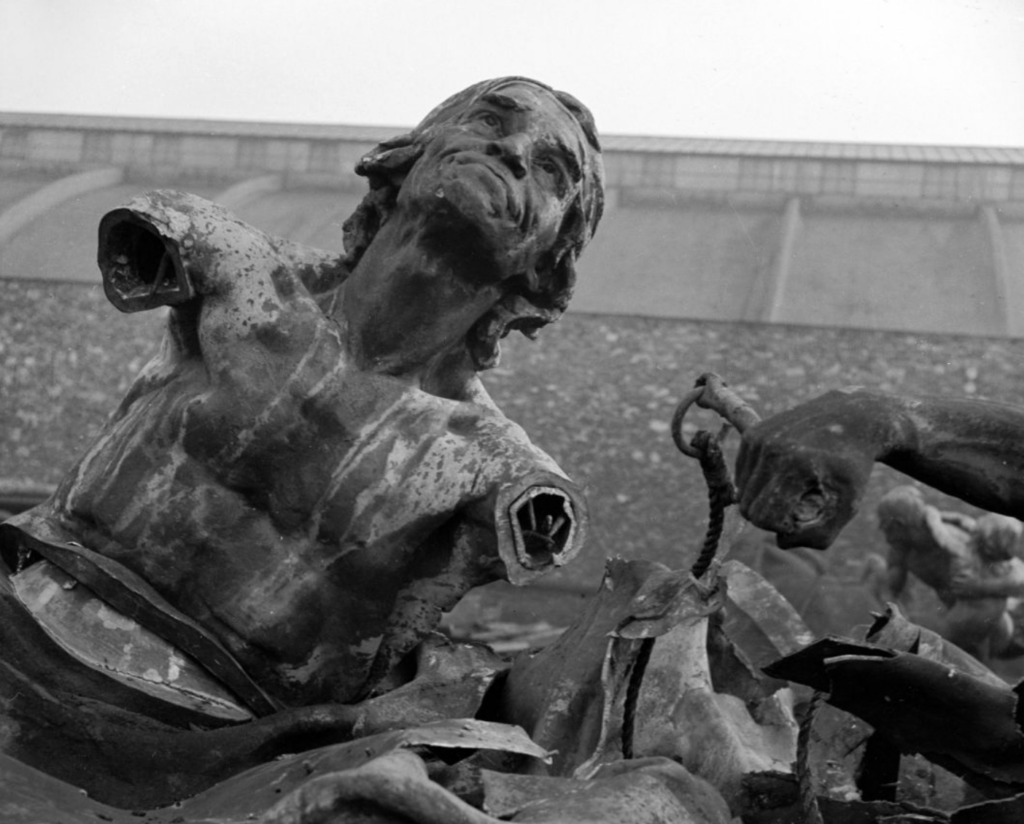
Bombed Artwork WWII
Why This Painting Survived Wars and Voyages — But Not DIY Cleaning
This painting had survived coups and revolutions. It survived the Nazi’s bombs, fires and thieves of World War I and World War II. It survived lousy packing and handling; transport across Europe, who knows how many times; its traveled in the back and hidden in hay wagons, bounced around in who knows what weather; it survived unscathed the voyage in the hull of a ship across the Atlantic. It had endured all of this, and more without damage, for more than 150 years. And yet it could not survive in the hands of a prideful, full of himself, do-it-yourselfer, who destroyed it in less than thirty minutes.
The Sad Pattern We See with Family Heirlooms and Artist Restorations
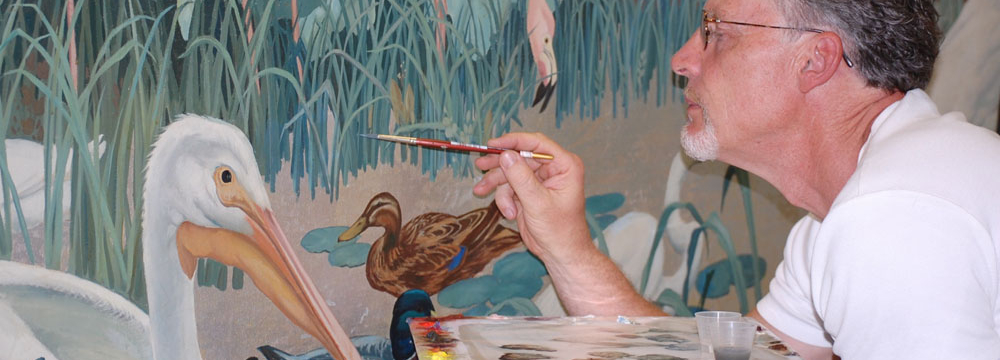
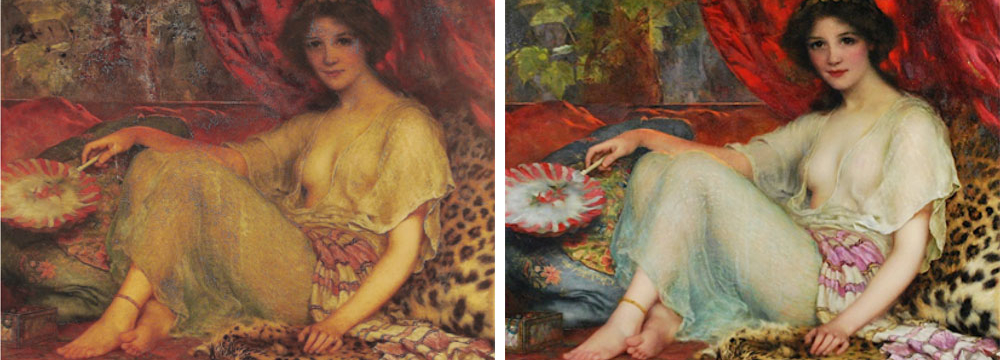
We see it happen often, if not constantly, to family portraits, heirloom ancestors who were “restored” by a friend who “knows how to paint.” Their creativity gets out of control, then they overpaint and lose the soul. Families hate the result in about 90% of the time, and then they bring it to FACL to try and undo the damage. Do you have questions about this process? Give us a call to discuss your questions.
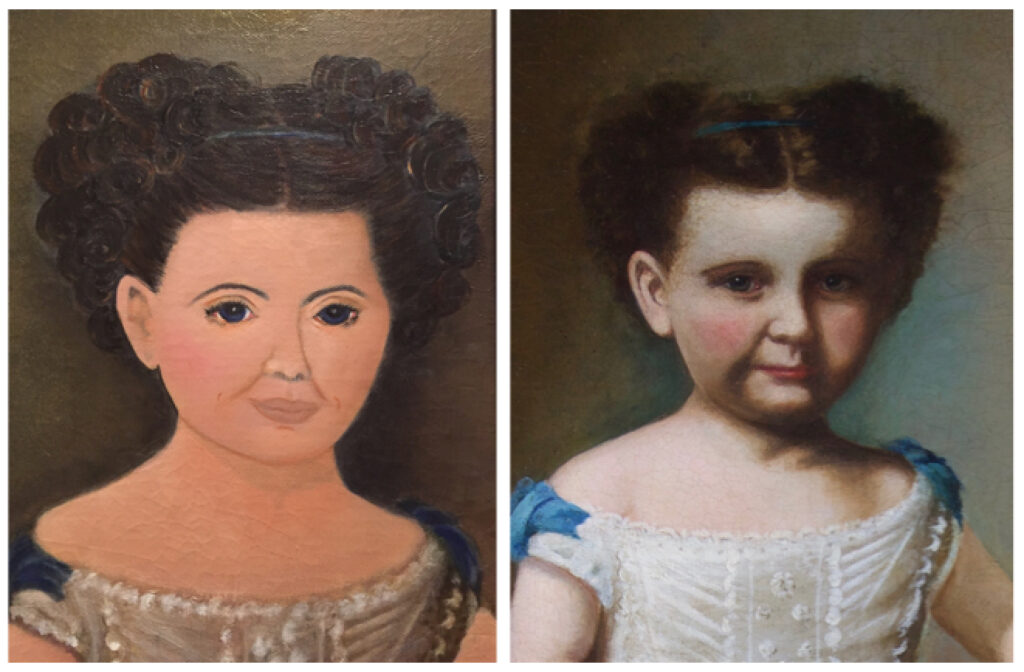
Nellie after she was repainted by a family artist friend… and after FACL overpaint removal and return to her original glory.
Lessons from Famous DIY Disasters Like “Behold the Monkey Jesus!!”
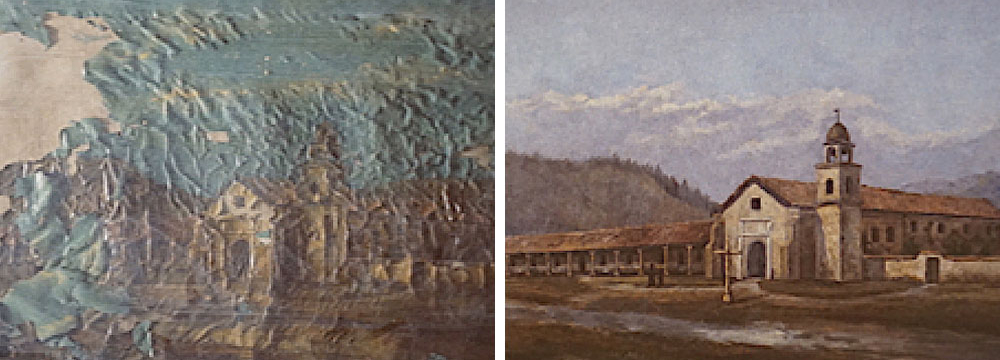
And honestly? It’s not just young amateur DIY’s… Remember the “Beast Jesus” or “Behold the Monkey” fiasco? That 2012 Spanish fresco—Ecce Homo—where an elderly parishioner “restored” it herself? Her final result turned a solemn 150 year old devotional image of Christ into a monkey-faced cartoon. The outcry in the news went internationally viral overnight, but the original art? Gone. Or the guy in Italy who “cleaned” a 15th-century Madonna with acetone—wiped off half the face. These aren’t jokes; they’re losses which cannot be undone… even if there is an exceptional quality super talented artist who can copy exactly someone else’s style and technique… that still doesn’t undo the damage done… it still isn’t the original artwork anymore. And that has negative results.
Varnish yellows, dirt builds, cracks appear. But DIY? One wrong solvent, one too-hard scrub, and you’re not cleaning—you’re destroying. Professional work isn’t magic; it’s patience, testing, layers of protection. We map every stroke first, use micro-tools, work in controlled light. If something’s off, we stop. That’s why people trust us.
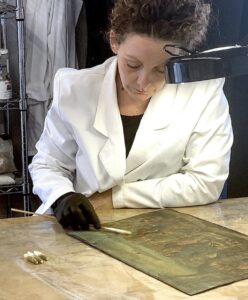
Virginia Panizzon Cleaning a Painting
If You Have Questions About Your Own Painting
The takeaway? If your piece looks dull, yellowed, or cracked—if you’re even thinking “maybe I could try”—don’t. Call someone who does this daily. Not because of marketing hype, but because we’ve seen what happens when DIY folks “wing it.”
If you have questions about art preservation, restoration, conservation, give us a call to chat. Here’s my mobile phone: 805-570-4140.
A word of warning: friends, who are artists, NEVER do a good job on restoring paintings and most often destroy the original. So there you have it! A true confession about throwing someone out of our painting conservation laboratory. My blood still boils to think that he told me it was my fault!!!!
Scott M. Haskins and Virginia Panizzon
Art Conservators
805 564 3438
gena.FACLBusinessManager@gmail.com