






Scott M. Haskins
I’m often asked, “How or why did you get into art conservation?”
As a kid growing up, I was always interested in science and the arts. That stayed with me through college. When I was about to get my bachelor’s degree, my art history program chair asked me if I had ever considered art conservation for graduate work. I had never even heard of it. Turns out, it was the perfect marriage of my two main interests: The application of science to the preservation and restoration of art.
My Formal Training
Most industrialized nations of the world have formal art conservation programs (I’m not talking about private restoration schools, trade schools or apprentice programs) where something comparable to a Masters Degree in the US can be obtained. The waiting lists to get into these university or government programs are usually long and reapplication is required for years. But, the stars aligned and I was admitted after my first application to the conservation center in Lombardy, Italy – a satellite program affiliated with the National Center in Rome (ICR).

The 1000 year old abbey where I worked on my first mural
The first week of classes, I was on scaffolding looking and getting instruction for working on an affresco dated 1365. With a big smile I pinched myself and said, “This is great!” I appreciated the experience knowing that other art conservation students around the world were going to have limited hands on experience, especially the first year. And here I was, already in the thick of things from the “get go.” I was not disappointed with my choice over the years. During my three year program, I worked on numerous Renaissance to Baroque affrescos in ancient abbeys, libraries and churches. I also worked on many small and very large canvases. We worked on site and in the state of the art laboratories of the conservation center.
I got instruction from seasoned professionals who had worked around the world on UNESCO projects (on murals in temples in Burma and in the tombs of Egypt) and who were well informed on international current standards of practice, and techniques especially after working with the international community in response to the devastating Florence Flood of 1966 (9 years earlier). Our professors and teachers came up from Rome and we went to Rome often to interact with the Istituto Centrale Del Restauro.
I graduated from the formal Italian government 3 year painting/mural conservation and restoration program in 1978.
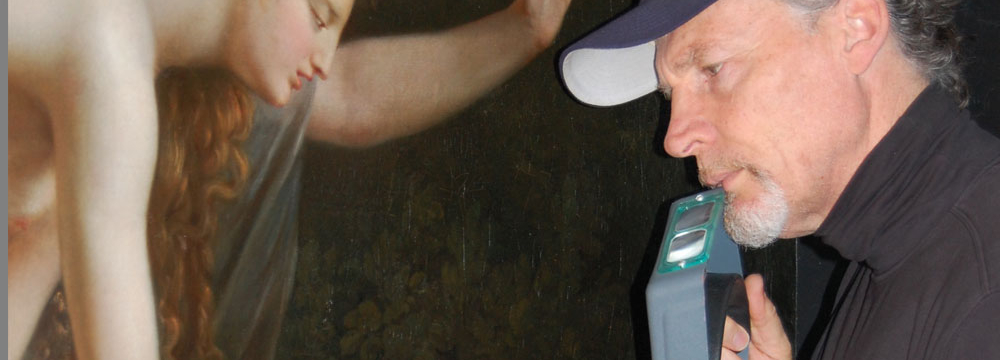
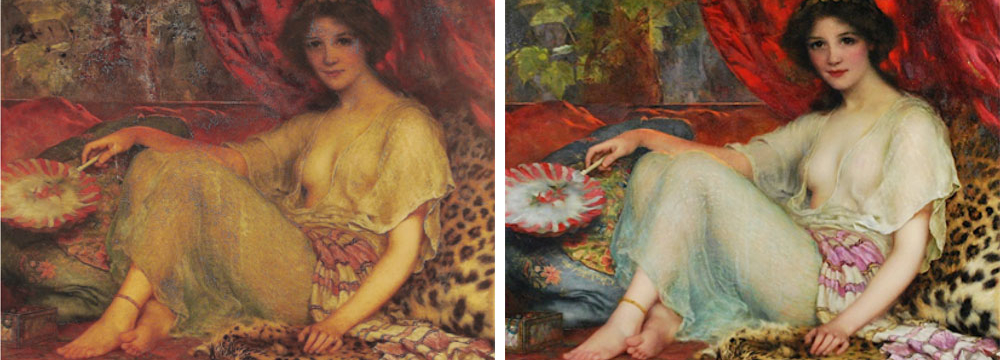
As you can see, art conservation and restoration has specializations in the profession. I work on paintings; Paintings on walls (murals), paintings on canvas (easel paintings) and art on paper. I don’t work on books, furniture, stained glass windows, old cowboy boots, antique cars, ancient documents, mummies… just paintings.
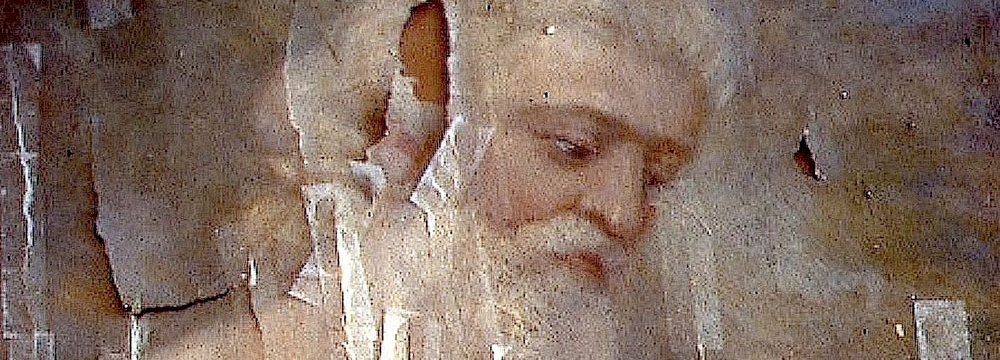
From this point of the story onward, I’ll let you scroll through the background info in the navigation bar under the header photos. Also, here are a couple of newspaper articles:
For a feature article in the Life Section of the Santa Barbara News-Press go to http://www.fineartconservationlab.com/media-room/art-restorerconservator-scott-m-haskins-featured-in-life-section-of-newspaper/
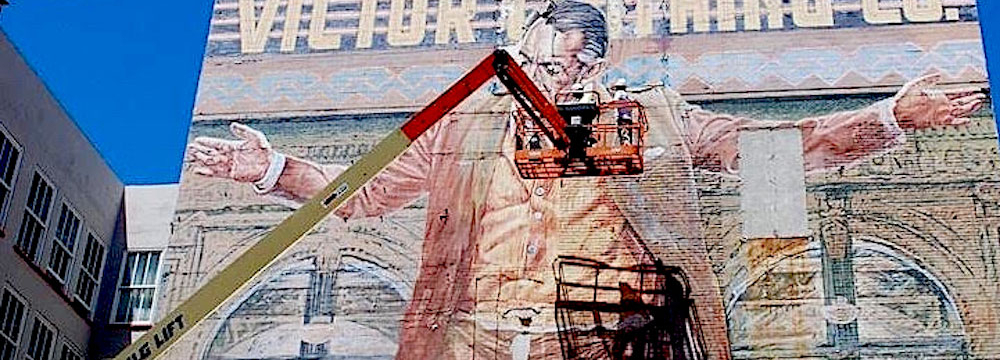
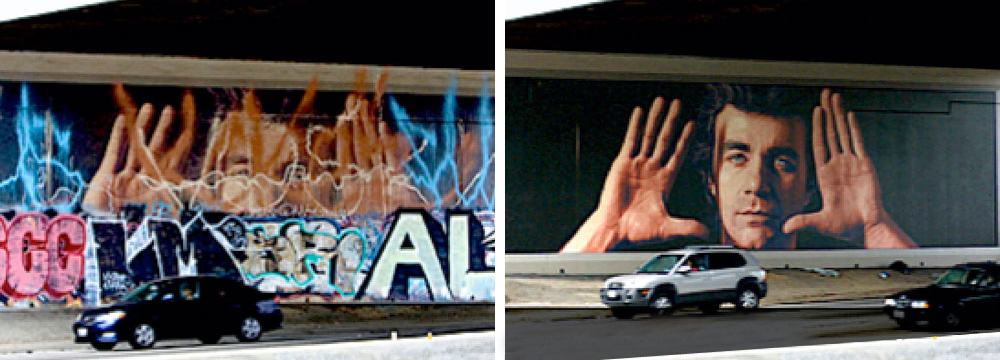
Article in New York City about mural conservation in Los Angeles https://www.artsy.net/article/artsy-editorial-meet-the-man-saving-l-a-s-street-art-one-mural-at-a-time

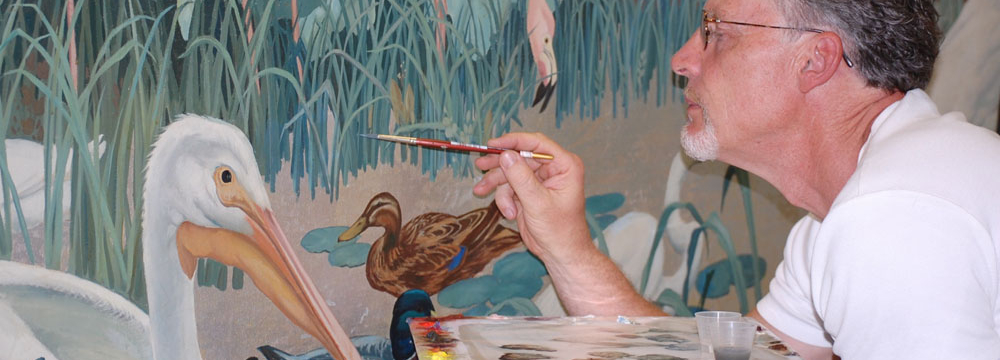
Inpainting a mural by Jessie Botke

Hello,
Our family has a couple oil paints that are 80 -100 years old and some of the paint is starting to flake off. We need to know what we can expect for cost and time. I have a couple images of the paintings.
Debra, thanks for leaving your comment/question. Call me and we’ll discuss the options 805 564 3438
Can you recommend someone who can restore a contemporary painting that has a tear in it?
Thank you
We are happy to talk to you about your questions Dr. Hurst. Please feel free to call me. Scott, 805 570 4140
Thanks for your nice comment Randy. My work does seem to me to have a social conscience/benefit. I love the idea that even though I’m kind of a ninja art conservator (if I’ve done my job right you can’t tell I’ve been there) and my name will probably be forgotten and unknown professionally, our work will ensure that the benefits of art, history and people’s memories will last generations, perhaps centuries into the future to benefit society. Scott 805 570 4140 mobile
Scott, my father did many religious murals at catholic schools which now have closed. The pastor of our church would like to remove the murals and put them in the churches. The mirrors are on canvas and glued to the wall. Any information will be greatly appreciated.
Hello Mary, thanks for leaving your comment. Sorry I’m responding so late. I never received the notice that you left this request. I can be reaching on my mobile at 805 570 4140. Usually, the process is for us to talk on the phone, maybe you can send me a photo? Then I will come and see the artwork at no cost or obligation where I can assess the problems and determine all your treatment options and give you costs. Give ma a call. Let’s chat.
Scott, I found you; after meeting you and your daughter at IHOP in Richmond!! Very interested in your work…fascinating!! Thank you for a great little conversation!! Jim
Jim,
It was great to meet and talk with you too about your illustrious past and Italy. I think you will find interesting this link to a video of a consultation project I’m involved with in Northern Italy: https://www.fineartconservationlab.com/travel/expert-historic-preservation-consultant-on-extra-ordinary-baroque-murals-hidden-away-in-northern-italy/ Leave a comment on the page if you like it. Warm wishes, Scott