



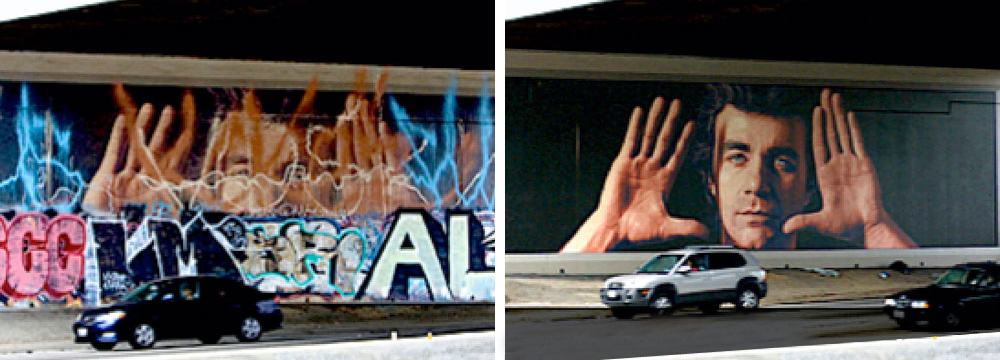
When the News Says “AI Restored a Painting”

by Scott M. Haskins, Art Conservator

https://www.FineArtConservationLab.com
Nonsensical for future generations

The Ai art restoration coverage practically wrote itself. “A Game-Changer For Restoration,” announced one outlet, declaring AI was “revolutionizing art conservation, restoring centuries-old, damaged paintings in just hours rather than years.” Another ran “MIT Student Invents Breakthrough Art Restoration Technique.” Artnet asked “Can A.I. Restore a Renaissance Painting?” and helpfully answered its own question in the headline: “Yes.”   And this one kills me, CNN simply declared the method “faster and more ethical than manual restoration.”

Hours instead of years. Revolutionary. A breakthrough. Faster and more ethical than the work conservators have refined over a century. You would think someone had figured out how to un-crack five hundred years of dried, lost oil paint by waving a phone at it.

Is AI Restored a Painting Really a Thing?

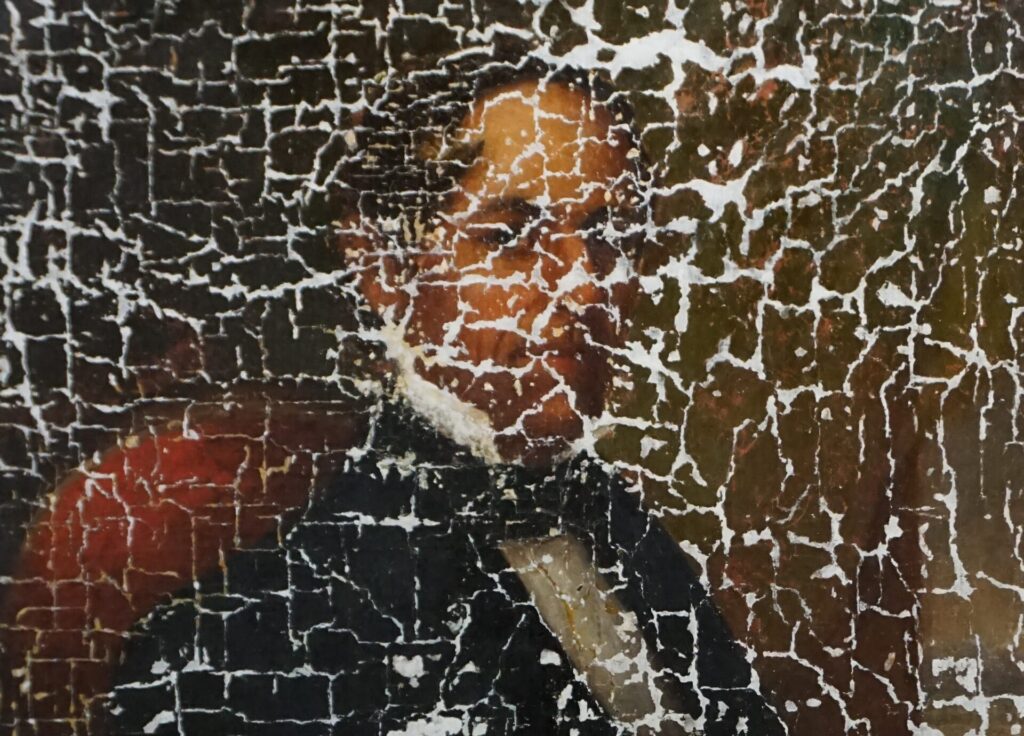
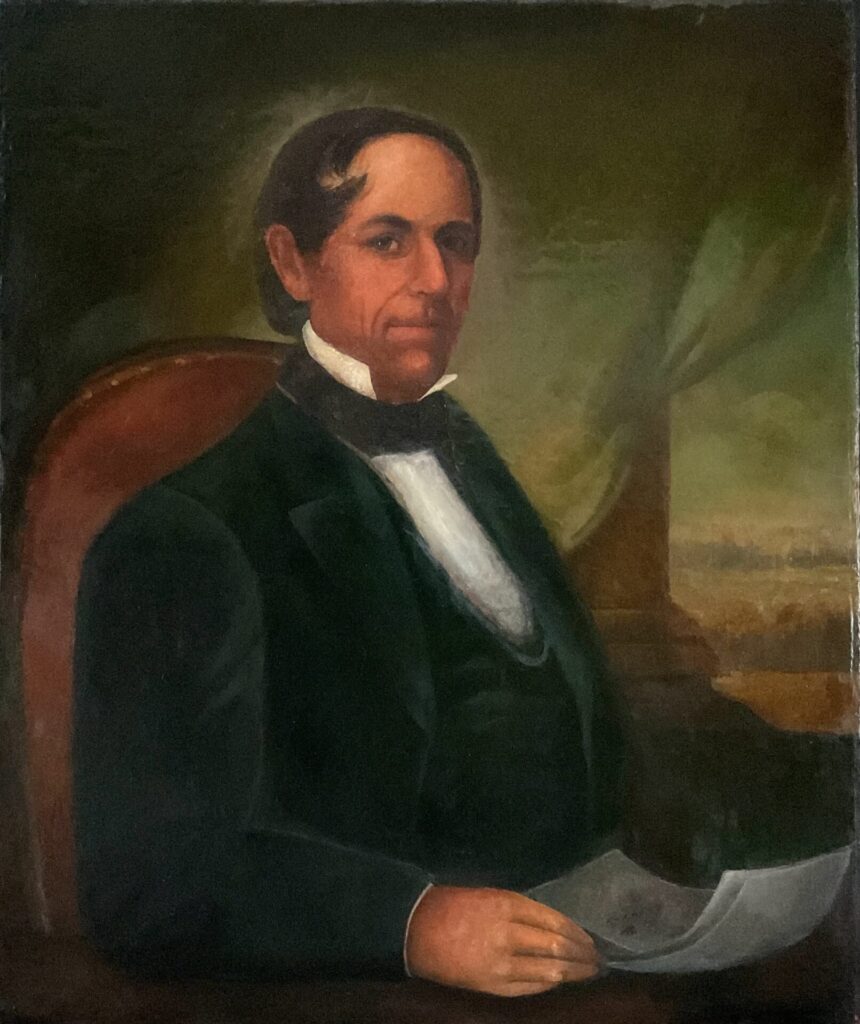
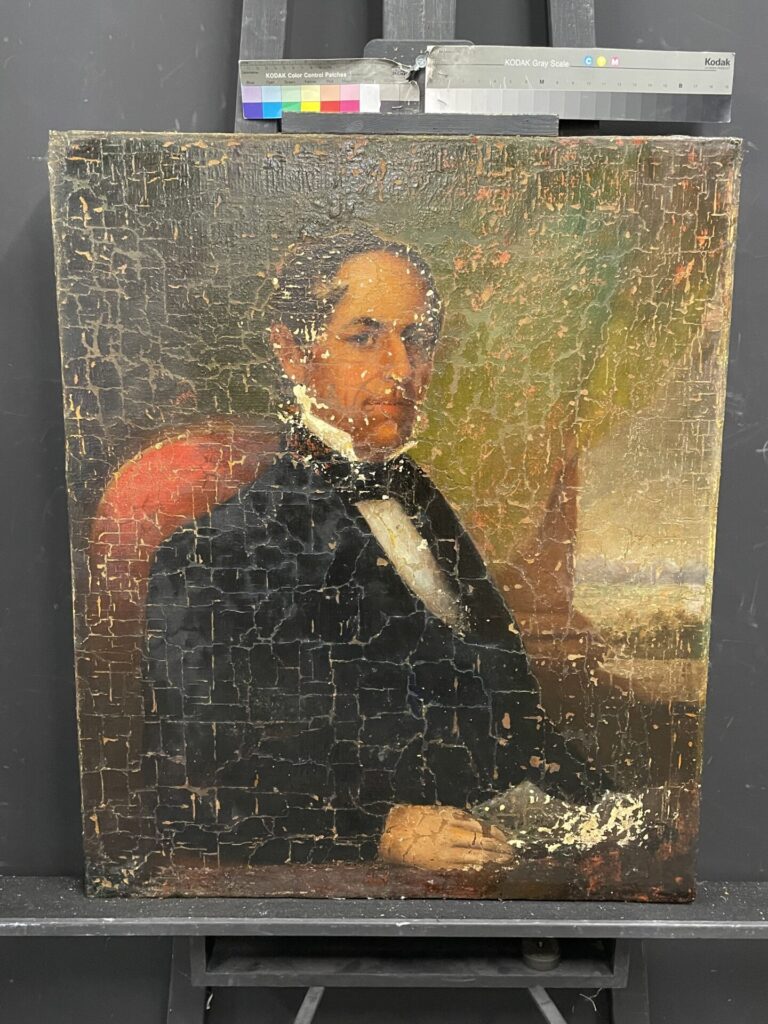
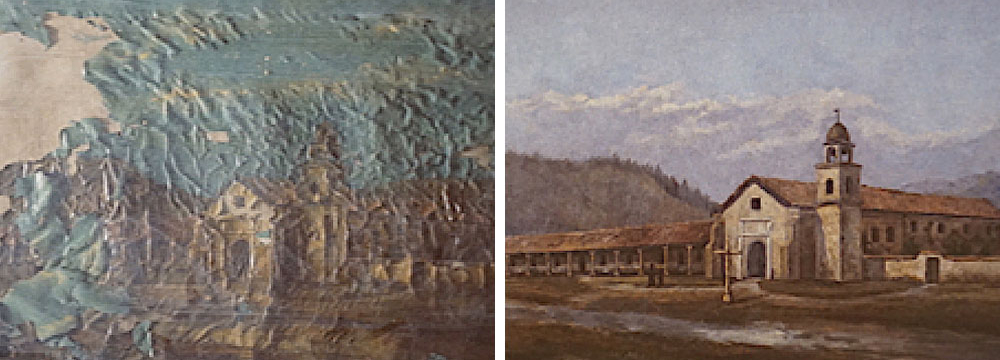
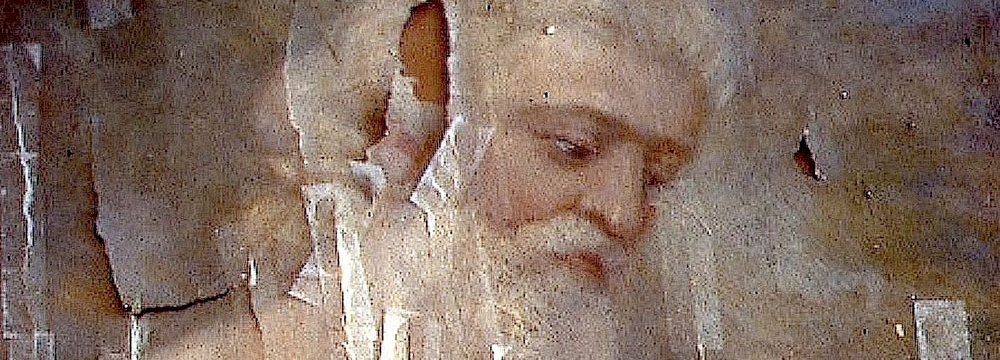
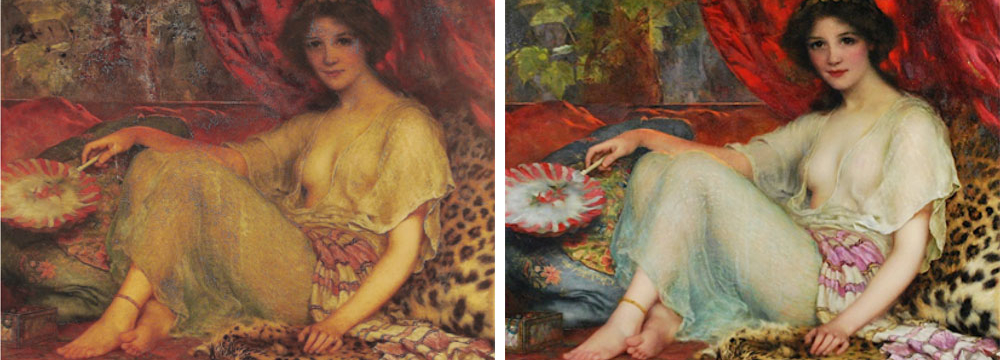
What actually happened is that a clever graduate student printed a picture onto a sheet of film and laid it on top of the painting. The painting is still cracked. It is cracked underneath that film right now, exactly as cracked as it was before anyone turned on a computer. Nothing was stabilized, preserved or restored. A photograph of a guessing algorithm was placed over the damage. That is the entire trick — and it could be a genuinely interesting piece of engineering for some marketing purposes and educational purpose— but “interesting piece of engineering” does not sell as well as “AI heals masterpiece in an afternoon,” so the second headline is the one that ran.

This is what happens when people who do not practice a profession get to define its words for the public. The reporting reached for the most thrilling verb available, “restore,” because the accurate description — “printed a removable reproduction overlay that leaves the original untouched” — does not make anyone click. The excitement and the accuracy pointed in opposite directions, and the coverage chose excitement every time.

That choice has consequences for anyone with a damaged painting or mural they care about, and correcting the hysterical pronouncements is the reason we’re writing this. If you have questions about a piece of your own, we’re always glad to talk it through on the phone. Scott Haskins, Painting Art Conservator 805 570 4140

What the technique actually does, stripped of the headline

Here is what the MIT graduate student’s method does, without the promotional language. A damaged painting is scanned. Software maps the areas of loss. An AI model generates a digital guess at how those areas might have looked when the painting was new. That generated image is printed onto a clear polymer film, the film is aligned over the painting (but we don’t know what adhesive is used to attach it to the painting) and it is applied with a layer of removable varnish on the painting.

To the researcher’s credit, the method was designed to be transparent about itself. The film is removable. It sits on top of a varnish layer, not on bare original paint. Some areas of the print were intentionally left visible up close so a viewer can tell the overlay from the original. The work was published in a peer-reviewed scientific journal, and the inventor clearly thought about not deceiving anyone. None of our argument here is a knock on the engineering.

The problem I’m commenting on is not the tech (which has important application flaws). The problem is the word the news wrapped around it. Its what the public hears.

When you restore a painting, you work on the painting. When you reproduce a painting, you make a copy and the original sits untouched. This technique makes a copy and places it on top of the original. By any professional standard, that is a presentation tool — a way to show a viewer an approximation of the lost image — not a treatment of the artwork itself. Calling it “restoration” is the same category of mistake as calling a high-quality giclée print of your grandmother’s portrait a “restored painting.” The print might look wonderful. Your grandmother’s actual painting is still in the closet with the water stain.

What restoration actually means — a real case
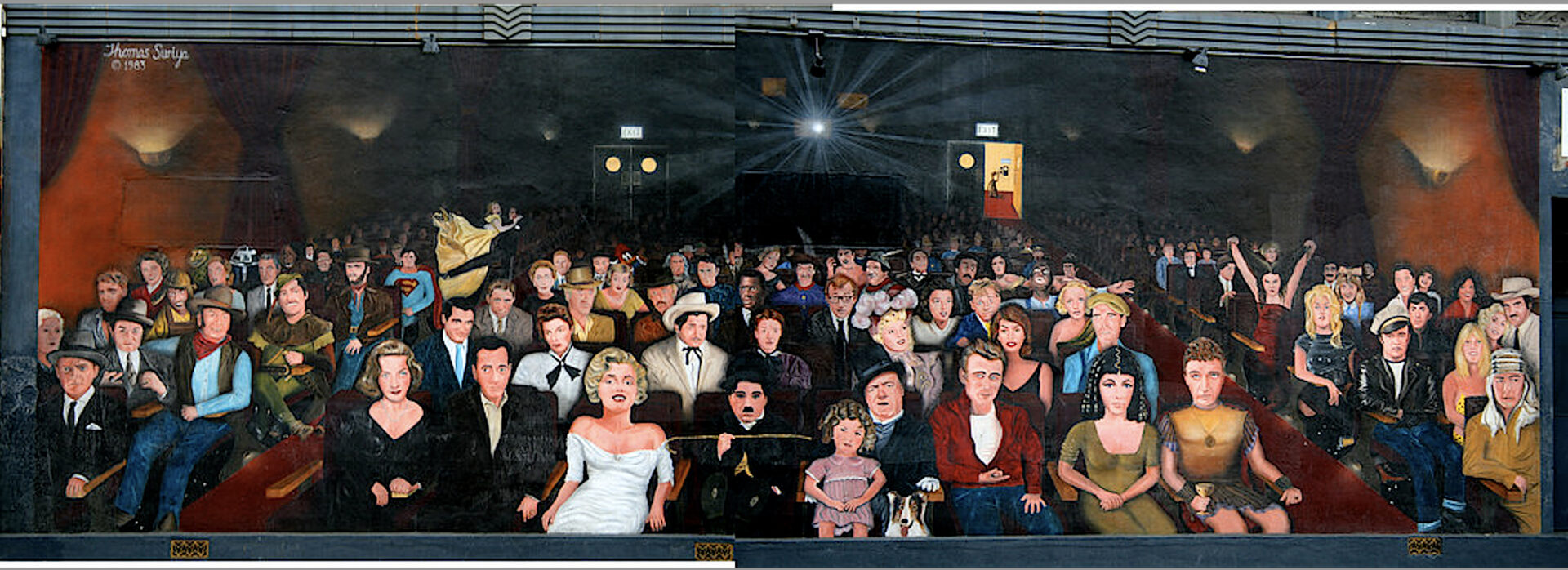
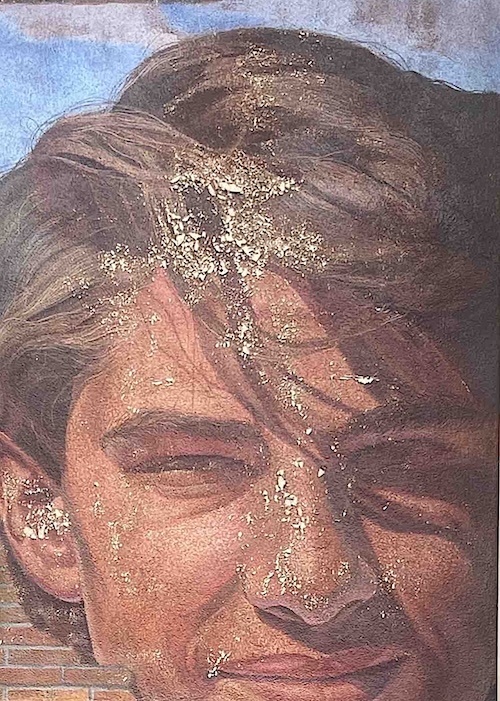
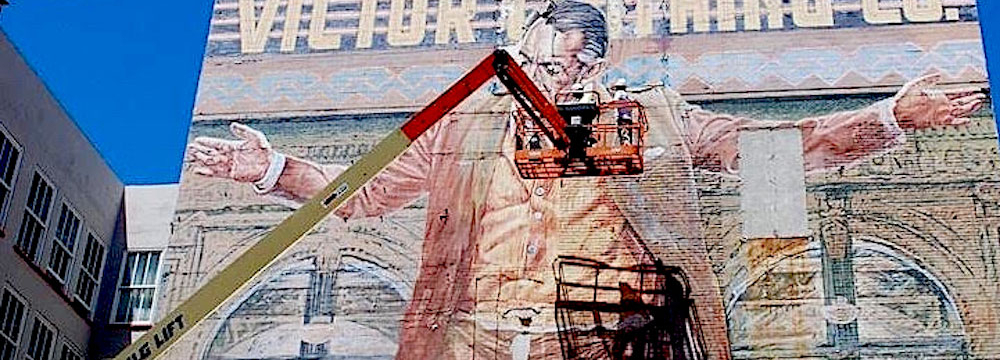
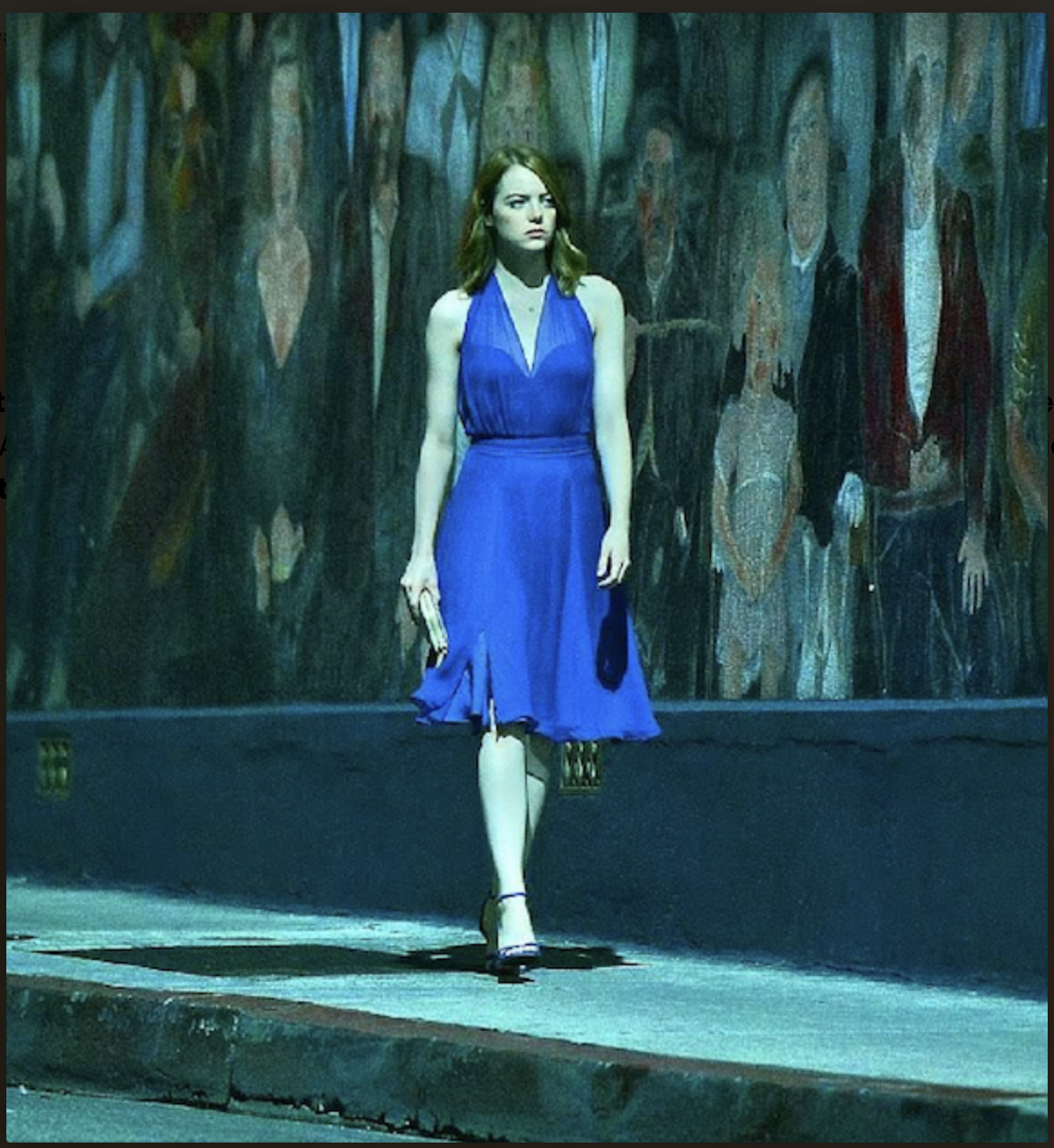
You Are The Star painted in 1983 by Tom Suriya at Hollywood Bad and Wilcox

Case in point which may hit home if you have visited Hollywood. Just off Hollywood Boulevard at the intersection of Wilcox, there is a famous painting called “You Are The Star.” Millions of people have taken selfies in front of this mural depicting old Hollywood movie stars sitting in theater seats looking at you as if you were on stage or on the screen.

Unfortunately, to be accessible for the selfies it’s located directly on the level of the sidewalk, so all kinds of dingdong vandals are able to tag it. It is now covered with graffiti and is unidentifiable.
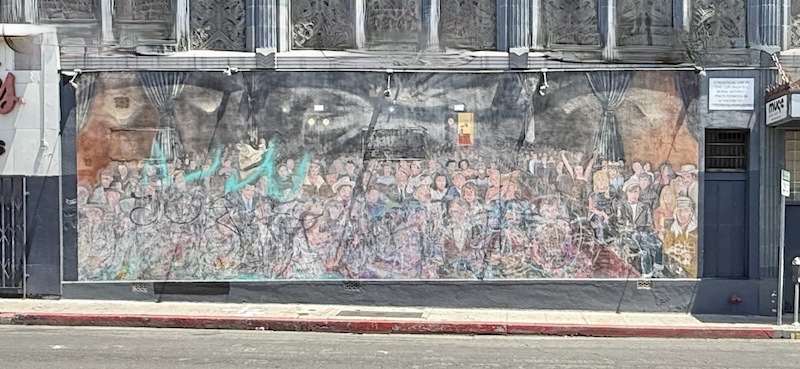
Screenshot

Last month, some head-strong marketing person with her own agenda printed a copy of the mural and then covered the actual mural with the copy. There was quite an uproar in the community because it happened overnight without oversight or authorization.

I was called up immediately to comment on the “restoration” and looking at photographs, I was able to tell that it had been covered over with a print. The print was taken down within 24 hours. In the meantime, the artist was preparing to file a lawsuit according to the reputation protection offered by V.A.R.A and the community was offended with the counterfeit effort to mask over the graffiti instead of properly removing the graffiti and bringing the mural back to life one of the most popular pieces of public art in Hollywood.

That is the difference. Reproduction covers the original. Restoration recovers it.

The value — artist’s reputation, financial and emotional, historical — lives in the original object. A printed overlay, however precise, is a picture of the painting. It is not the painting.
A standing question for any institution that calls this restoration

So far, no museum or collector has stood up and announced they are adopting this method and calling it restoration of an original. The enthusiasm has lived in the marketing departments of the press, not in the institutions. But the technology is new and the headlines are loud for now but… soon you won’t hear any more of it as a “legitimate restoration technique.”

When that day comes, here is my standing question for any museum, gallery, or collector who adopts an overlay like what we are talking about and presents it to the public as a restored work. I will ask it openly, and in print if need be: did you treat the painting, or did you cover it? If the honest answer is that the original is still cracked and lost underneath a printed film, then a reproduction was hung in front of an artwork and the public was told the artwork was healed.

I will defend anyone’s right to display a reproduction. There are good and honest reasons to show the public an approximation of a work too fragile or too damaged to exhibit safely. What I will question, every time, is the right to call that restoration. The word means something. It means the genuine object was recovered and cared for. An institution that blurs that line is not advancing conservation or the public’s education. It is teaching its own visitors to mistake a copy for the real thing, and that is a disservice to the very heritage a museum exists to protect.

Where AI genuinely belongs in conservation

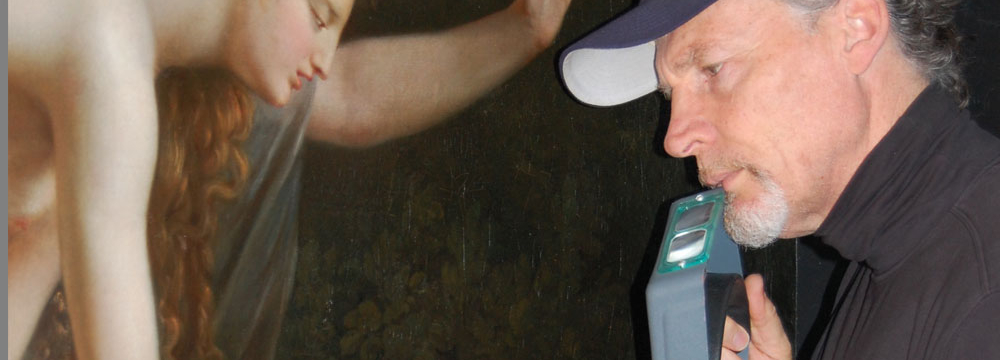
A research consortium involving eleven institutions — including the Art Institute of Chicago, the Victoria and Albert Museum in London, the MUNCH Museum in Oslo, and the National Archaeological Museum in Naples — has been developing AI tools to study how colors in fragile objects have faded and shifted over time. The goal is understanding and documentation: helping researchers and conservators see how a faded textile or a classical sculpture may have originally looked, so that knowledge informs how the real object is cared for. That work is now continuing under a successor project. This is AI used correctly — as an analytical aid that sharpens professional judgment about the original artwork, not as a substitute for treating it.

The distinction is simple. AI as a study tool: legitimate and valuable. AI output printed onto film and laid over a damaged original, then called “restoration” to a public that has no reason to know better: that is where the profession has an obligation to say something. Standards of Practice, Ethics are important for integrity.

Technology changes. The standard does not. Examination, documentation, stabilization, and reversible treatments of the genuine object — performed to professional ethical standards — is what protects a public artwork and the family history riding on your heirloom.

What the press consistently gets wrong about art conservation

This story is not an isolated incident. The confusion between reproduction and restoration is one version of a much older problem: the press covers art conservation the same way it covers magic tricks. Something looks dramatically different at the end, so the headline says it was “transformed,” “brought back to life,” “saved,” or “restored.” The mechanism — the actual professional work that produced the change — gets one sentence, if that, before the story moves on to the before-and-after photograph.

That pattern produces specific, recurring errors that anyone in this profession recognizes immediately.

The word “restoration” is used as a catch-all for anything done to an old object, regardless of whether the original was treated, replaced, reproduced, or simply cleaned. A painting that had a century of yellowed varnish removed — so the original colors became visible again — gets reported as “restored to its former glory.” What actually happened is that nothing was added and nothing was changed; a layer of aged coating was removed and the original painting was already underneath, waiting. That is cleaning. It is important professional work, but it is not restoration in any precise sense, and blurring those words trains the public to have wrong expectations about what conservation involves and costs.

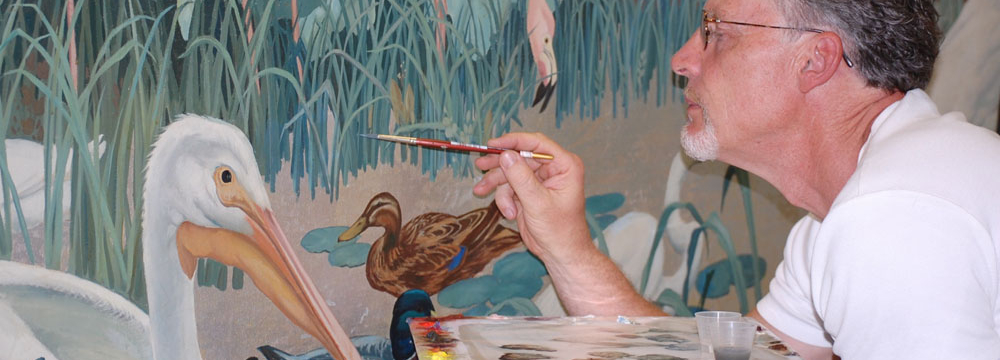
The word “expert” is applied to anyone who touches an object, regardless of training, credentials, or professional standing. A hobbyist with a YouTube channel and a tube of paint gets the same word as a conservator with decades of documented institutional work, peer-reviewed publications, and a track record of reversible treatments on nationally significant public art. The credential gap is enormous. The headline does not mention it.

Speed is reported as an unqualified virtue. “Restored in three hours” is presented as straightforwardly better than “restored over nine months.” In professional conservation, the pace of a treatment is determined by what the object requires, not by what is convenient or impressive to announce. Consolidating actively flaking paint on a mural painted in lead white adhesive takes the time it takes. Cutting that time means cutting corners, and corners cut on a fifteenth-century panel painting are not recoverable. The press treats speed as proof of advancement. Professionals treat it as a variable to be managed carefully.

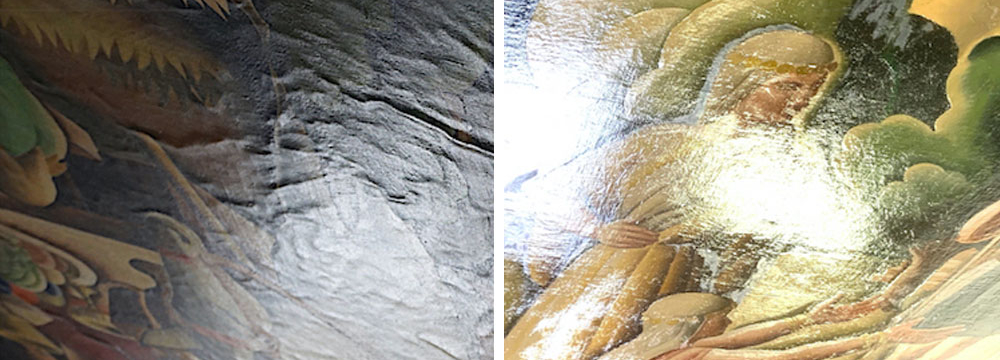
The before-and-after photograph drives almost all coverage, which means the coverage selects for treatments that produce dramatic visual change. The most important conservation work — stabilizing a structurally failing support, removing a toxic lead-based adhesive that is destroying a canvas from behind, documentation that ensures a work can be treated correctly by conservators a hundred years from now — produces little or no visible change at the surface. It rarely gets covered. What gets covered is the striking image, and the striking image is almost always a reproduction, a digital rendering, or a cleaning that removed something rather than a treatment that preserved something.

The practical cost of all this is real. Clients arrive with expectations shaped by press coverage rather than professional reality. They have read that AI can restore a painting in an afternoon, that a specialist can fix a tear in a single session, that technology has made the slow and careful work of the past obsolete.

When they are told that stabilizing a fragile panel will take weeks and cannot be rushed, that the damage they are seeing required specific materials that are not available at a hardware store, that the “expert” they saw online is not credentialed in any recognized professional body, they feel they are being told something strange. They are not. They are being told what the profession actually is, as opposed to what a news cycle made it sound like. Its why people who ask for a per sq. inch estimate for the restoration of their painting from a photo are disappointed.

Fifty-five years of this work have given me a particular view of these patterns. The sensationalism is not malicious. It reflects a genuine gap between what makes a compelling story and what makes a sound treatment. But the gap has widened as the technology has gotten more photogenic, and this MIT story is the most vivid example yet: a printed film overlay with no treatment of the original gets global coverage as a conservation breakthrough, while the painstaking removal of five layers of overpaint from a pre- World War II 1930s mural buried in a city council chamber gets a paragraph in a local paper, if that.

The standard has not changed. The noise around it has. Knowing the difference is worth something, and it is always worth a phone call to find out what your piece actually needs from someone who will tell you the truth about it. Questions? Scott Haskins, Painting Art Conservator 805 570 4140

FAQ Common Questions About AI Art Restoration

What is the difference between reproduction and restoration? Restoration is work performed on your actual artwork to stabilize and recover it. Reproduction is making a copy, and the original stays unchanged. With restoration you keep the real object, cared for. With reproduction you have a picture of it. The history and the value live in the original.

How do I know if someone is offering real treatment or just a cover-up? First of al the tech being announce in the headlines is not available locally. But, its worth asking one question: is the work being done to preserve my original, or is something just being placed or painted over it? A professional art conservation treatment stabilizes and recovers the actual object, documents every step, and keeps every intervention reversible. If the original stays damaged underneath a substitute, that is reproduction — however advanced the technology.

Does reversibility make something a legitimate conservation treatment? Reversibility is one professional standard, and the AI overlay may meets it… of its not stuck on the painting with some gosh-awful industrial adhesive — the varnish on the artwork theoretically would make it easier to remove off of an old oil painting (not an acrylic painting). But reversibility alone does not make something a treatment. A removable copy on top of the original is still a copy on top of the original. Conservation means the original itself was worked on and stabilized, preserved and restored.

I have a damaged painting. What should I actually do? Call before you commit to anything. Tell us what the piece is, how it’s damaged, and what it means to you. We will give you a straight assessment of what it actually needs — cleaning, stabilization, structural repair, or simply better storage — and you’ll understand your real options. The goal is always to preserve the original you already have.

Questions Call Fine Art Conservation Laboratories at (805) 564-3438.

Keywords: Fine Art Conservation Laboratories, FACL, Scott M. Haskins, Virginia Panizzon, art restoration, art conservation, oil painting restoration, oil painting conservation, professional art conservation, AI art restoration, mural conservation, painting reproduction, reversible conservation treatment, overpaint removal, preservation and restoration of art

This blog post was syndicated

Content Syndication Graphic.jpeg

This article has been shared on at least 20 additional platforms to be more available to the media experts and the public seeking answers to questions on professional art conservation. This article shares authoritative real world stories, examples and answers questions from our lab on Ai Art Restoration Related Issues. These placements help ensure that reliable information is available from a well-known professional source.

https://www.expertclick.com/NRWire/Releasedetails.aspx?id=315095

Posted in Consultations, In The News About Art Conservation, Interesting Stories | Tagged | Leave a comment

Historic Mission Inn Sold — What Will Happen to Its Art Collection?!

Updated: June 2, 2026

Big news for those acquainted with the historic Mission Inn in Riverside CA and the historic art collections on display that have been owned by Duane and Kelly Roberts since 1985 when they bought the closed down historic property which initiated a revitalization in the downtown area. It also added new breath to the Mission Inn Foundation and the community support organization, The Friends of the Mission Inn.

Since 1985, Fine Art Conservation Laboratories and Scott Haskins, Art Conservator, have been assisting the preservation and restoration of art efforts for the collections that are on the three separate inventories of the above organizations. But the hundreds of historical collectible artifacts and fine art were all part of the collection put together by Frank Miller for his fantasy, Hearst Castle-type retreat that has been a favorite getaway of the famous and infamous for the last century (many presidents of the US have stayed there). If you haven’t been there and seen it, you’ve been missing out.

Mission Inn art collection Scott Haskins FACL Henry Chapman Ford paintings Art restoration Riverside California

“Authors Row” at the Historic Mission Inn in Riverside CA where famous writers came to “camp out.”

An inner courtyard with the specialty rooms known as “Author Row”… just a small part of what there is to see.

Have questions about your own family heirlooms or artwork? Call Scott Haskins or Virginia Panizzon, Art Conservators at (805) 570-4140 or email Gena.FACLBusinessManager@gmail.com. We would like to chat with you.

How FACL’s Art Restoration Relationship with the Mission Inn Began

In 1985, A very famous component of the Mission Inn art collection came up missing. Scott Haskins, Art Conservator, was able to locate the famous Missions of California paintings (painted between 1874 – 1889 on site at the missions!) by Henry Chapman Ford which had been sequestered by a disreputable art dealer. Unknown to the art dealer, Mr. Haskins met with a sympathetic accomplice who, under cover, let him into a storage unit and took possession of all the original framed 38 works of art on behalf of the Friends of the Mission Inn. These paintings, extremely important to California history, were then a major multi-year project of professional art restoration undertaken by Fine Art Conservation Laboratories and were later featured in a PBS special.

Mission Inn art collection Scott Haskins FACL Henry Chapman Ford paintings Art restoration Riverside California

Mission Santa Cruz Before Conservation 1986

In 1986, Scott Haskins was asked to tour and hunt down — it was like a treasure hunt for a lost priceless hoard — every corner, attic and closet of the fenced off, closed down ghost-property of the abandoned Mission Inn to look for randomly placed artwork and collectibles, even in the haunted catacombs. All these items were gathered into a storage area at the bottom of the famous circular staircase. The Friends of the Mission Inn undertook the inventorying and cataloging.

Mission Inn art collection Scott Haskins FACL Henry Chapman Ford paintings Art restoration Riverside California

The Circular Staircase, The Historic Mission inn

During that collection survey, proposals were made for preserving and restoring the variety of paintings and their frames to the new owner, Duane Roberts, and over the following years hundreds of paintings were readied for permanent exhibition within the historic complex.

Since that time, Mr. Haskins and FACL have been providing quality art restoration treatments, consultations, speaking at events and generally enjoying the association with the organizations that oversee the collections.

Mission Inn art collection Scott Haskins FACL Henry Chapman Ford paintings Art restoration Riverside California

Buddha in Ho-O-Kahn Room, Mission Inn

See the Friends of the Mission Inn Art Conservation Team page for more detail on past FACL projects at the Mission Inn.

The Mission Inn Riverside Art Restoration Work — What Was Saved

FACL preserved and restored all of the artwork and designed the layout in the Spanish Art Gallery at the Mission Inn. Also, all the statuary was prepared for the walls of the Galleria. Notable restorations funded by the Friends include: The Espousal of the Virgin, St. Francis and the Flying Cross, The Good Samaritan, Charge Up San Juan Hill, the two McBurney paintings, and the 36 California Mission paintings by Henry Chapman Ford — highlighted by a PBS Special.The Mission paintings by Henry Chapman Ford are a national treasure to the history of California, were widely published and greatly influenced the Spanish-style architecture in California. They are an eminent part of the identity of the Mission Inn itself.

Read about the Henry Chapman Ford and Edwin Deakin Mission paintings conservation project here.

Mission Inn art collection Scott Haskins FACL Henry Chapman Ford paintings Art restoration Riverside California

Spanish Colonial Alter and Tiffany Windows in the Chapel, Mission Inn, Riverside CA

So, What Will Happen to the Art Collection?

There’s already been a panic about the last owners wanting to take with them several of the very important works of art, which are fundamental to the identification of the Historic Mission Inn, with them. They would presumably sell them to maximize their profits.

Lastest Update:

This is an active and very current story. Here’s the rundown:

Kelly Roberts sold the Mission Inn to the Yuhaaviatam of San Manuel Nation in 2026, with the deal announced May 4. Kelly also announced she would be leaving California and relocating to Palm Beach. WikipediaRaincrossgazette

Then it got controversial. Just days before escrow was expected to close on May 28, two historic paintings were removed from the hotel and taken into Kelly Roberts’ possession. The two works: “California Alps,” an 1874 oil on canvas by William Keith, and “Charge Up San Juan Hill,” an 1900 painting of Theodore Roosevelt and the Rough Riders by Russian artist Vasily Vereshchagin — both had hung at the Inn for generations. HsjchronicleRaincrossgazette

The move sparked sharp criticism from local preservation advocates. A Riverside City Councilmember called the timing “vindictive” and described it as a “smash-and-grab.” Hsjchronicle

Roberts’ attorney pushed back, asserting the artwork is the lawful property of Kelly and her late husband, called the allegations “false and defamatory,” and threatened legal action against anyone repeating the claims. Raincrossgazette

Three unresolved legal questions hang over it: whether the 1977 National Historic Landmark designation binds moveable objects to the property permanently; whether any enforceable contract regarding moveable objects was executed over the 33 years of Roberts’ ownership; and whether any exclusionary clause in the current purchase agreement would be binding given the landmark designation. Raincrossgazette

Other items are also unaccounted for, including a small painting titled “Arch Beach,” a statue of the goddess Pomona, a Steinway piano, and the famous oversized Taft chair built for President Taft’s 1909 visit. Hsjchronicle

This is unresolved as of today — likely heading to litigation.

However, these works of art are part of the identity of the Mission Inn and are listed in the inventory of their historic registrations with the United States Historic Preservation and California State Preservation offices. Presumably that will create a difficulty for them to remove anything from the collection.

Frankly, I’m surprised that having been so intimately associated with the running of the Mission Inn Hotel and the importance of its historic heritage that the old owners would want to dilute and detract from its historical status, art collections and reputation by taking these important works of art.

But we have something else going for “us”… Several of the things they want to take with them are gigantic in size and not easily re-sold. I hope that causes a big enough problem to dissuade them.

More on this later… with good news for the integrity of the collection, I am hoping.

New Ownership — A New Chapter

The San Manuel Investment Authority has completed its acquisition of The Mission Inn Hotel & Spa. Pyramid Global Hospitality has been retained to manage day-to-day operations.

As a sovereign nation with deep ancestral ties to the Inland Empire, the Yuhaaviatam of San Manuel Nation is invested in the preservation of the property. Chairwoman Lynn Valbuena stated at the acquisition: “The Mission Inn is more than a landmark. It is a living institution — one that has witnessed more than a century of California history and has been woven into the lives of this region’s families, including our own. We are honored to carry that legacy forward with the same dedication to maintaining its historic dignity and prominence.”

It’s unknown at present if the new owners will continue the working relationship with Mr. Haskins and FACL — but the Friends of the Mission Inn continue to be anxiously hopeful.

If you have a question about your artwork’s condition/stability call Scott Haskins or Virginia Panizzon, Art Conservators at (805) 570-4140, or email Gena.FACLBusinessManager@gmail.com.

Mission Inn art collection Scott Haskins FACL Henry Chapman Ford paintings Art restoration Riverside California

The Historic Mission Inn, Riverside, CA

More on past FACL art conservation projects at the Mission Inn:

External link: The Mission Inn Hotel & Spa

Keywords: Mission Inn Riverside sold, Mission Inn new owner, Mission Inn art collection, Mission Inn art restoration, Fine Art Conservation Laboratories, FACL, Scott M. Haskins, Virginia Panizzon, art restoration, oil painting restoration, art conservation, preservation and restoration of art, Henry Chapman Ford Mission paintings, historic property art restoration, Friends of the Mission Inn, Yuhaaviatam of San Manuel Nation, San Manuel Investment Authority, Riverside County art restoration, Spanish Art Gallery Mission Inn, California mission paintings restoration, historic collection conservation, Mission Inn historic registration

Posted in FACL in the media, Historic Preservation, In The News About Art Conservation, Painting on canvas, Travel | Tagged | Leave a comment

Heirloom Oil Painting Restoration Salt Lake County Utah

By Aspen Smith, Art Conservation Technician Intern

Aspen Smith, Art Conservation Intern

When a cherished family heirloom — an oil painting that hung in the family dining room for a couple of generations — starts to show its age, the atmosphere in the home changes. The artwork may have survived several moves, a kitchen remodel, decades close to a fireplace, and even a stint in the garage or basement when no one quite knew what to do with it. Sometimes it sits in less-than-clean storage for a while, or a long while. Then one day someone stops and looks closely. The painting never used to look this dark. Maybe paint is flaking. Maybe the frame is banged up. For families across Salt Lake County, this moment of recognition is often the first step toward professional oil painting restoration — and FACL has been serving families along the Wasatch Front since 1978.

Ancestor’s portrait covered with nicotine

You might wonder if the painting is simply showing its age, or — as you notice cracks and delicate flakes of paint coming loose — you start to worry. It is natural to wonder if a canvas can even be cleaned safely without wiping away its history. Most people worry that this kind of aging is permanent, or worse, that trying to fix it will only make it worse (which is often true when handled by an amateur).

Do you have questions you’d like to ask and expert, someone reputable and knowledgeable? If you are looking at an easel painting in your home right now that looks yellowed, muted, or dirty, get another set of expert eyes on it before you make any decisions.

What Is Actually Happening to Your Antique Oil Painting?

In most cases, the change in colors you are seeing are happening on top of the painting, not inside it.

Oil painting restoration Salt Lake County — heirloom landscape before and after cleaning https://www.fineartconservationLab.com

Imagine never repainting or deep cleaning the walls of a house for half a century. Over time, a layer of accumulated grime takes over. For an easel painting, this surface layer is a magnet for fifty years of ordinary living. Old natural varnishes can naturally turn yellow, amber, or even dark brown as they age. At the same time, this protective top layer traps environmental pollutants like soot from fireplaces, candles, and kitchen oils floating through the air, alongside sticky nicotine residue from decades ago.

Because people are naturally terrified of damaging a precious piece, these layers just keep building up. That fear is entirely justified. A lot of irreversible damage happens when well-meaning owners try DIY cleaning solutions they found online.

Organizations like the American Institute for Conservation emphasize that improper cleaning attempts by non-professionals are in grave danger of resulting in the permanent loss of original paint. This highlights the absolute necessity of consulting a trained specialist before undertaking any surface treatment. We do not recommend attempting to clean your painting yourself.

Have questions about a painting in your home? You do not have to guess at the solution or risk damaging a family treasure. Get your questions answered by an expert by calling our professional art conservation lab at (805) 564-3438.

Inside the Professional Art Conservation Lab

Fine Art Conservation Laboratories


Everything from surface grime and yellowed varnish to severe lifting paint, flaking, cracking distortions, and rips (both small and super-ugly) can be safely stabilized and corrected in a professional art conservation lab. Heavy soot, puncture holes — you name it, it can be addressed.

Case Study: A Coal-Sooted Landscape, in the lab now

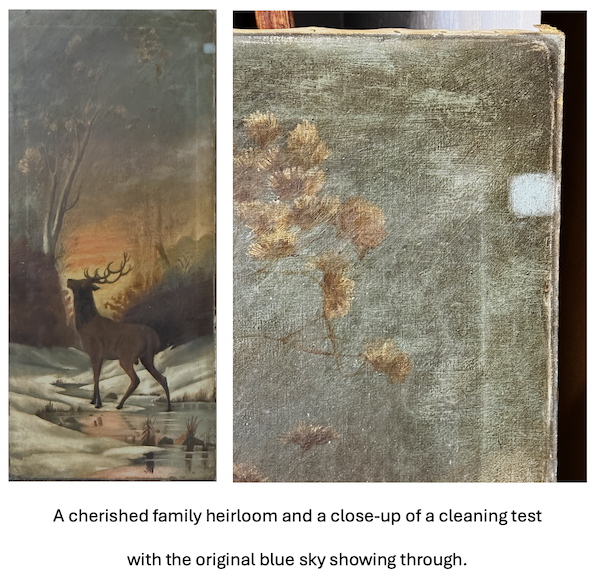
A startling example of this happened when a couple brought in a large old family painting that had become nearly impossible to enjoy due to accumulation from a past coal-burning heater. It was a scene of a deer standing among moonlit trees, but layers from the dirty air had built up over decades.

Old family heirloom oil painting with varnish and dirt that hide the real colors

To make matters worse, someone had previously attempted a do-it-yourself (DIY) cleaning. That attempt only removed an uneven layer from the very top of the varnish, leaving behind a patchy layer of black and yellow residue. You could hardly make out the image at all, and it looked nothing like what the artist intended.

During the initial assessment, we performed a controlled cleaning test. After cleaning just a small spot that did not damage the original paint, we revealed a glimpse of the vibrant colors hiding underneath. Once the full cleaning is complete, the painting will look absolutely incredible, with the deep forest tones and the details of the deer restored to full view. Clearing away the discoloration does not just clean the surface; it completely reveals the skill and intent of the original artist.

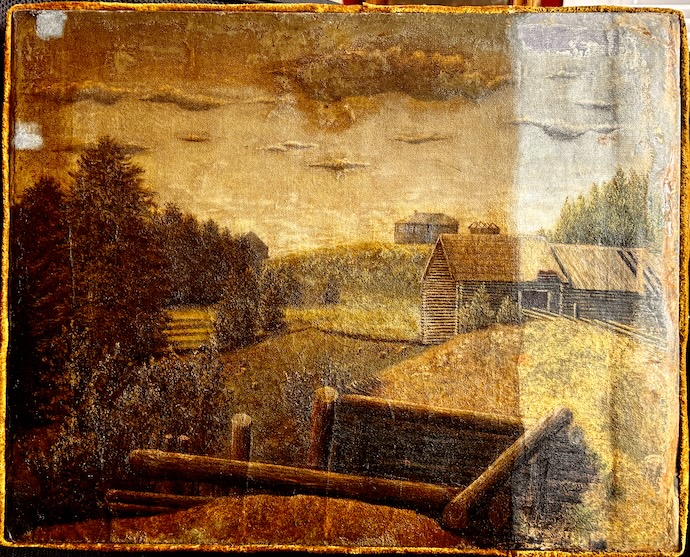
Case Study: The Estonian Heirloom

Conservator removing yellowed varnish from an antique oil painting in a professional art conservation lab https://www.FineArtConservatiobnLab.com

During removal of the horribly browned/orange varnish. Not the origin al colors on the right side.

Another deeply meaningful project involved a small heirloom painting with incredible history. The family’s ancestors had fled from Estonia during war, an experience that cast a shadow over the following generations. Because of the pain associated with that time, their Estonian heritage was rarely discussed openly. Eventually, the children inherited three small paintings, which served as their only tangible connection to their family roots.

During its time in the lab, a photograph was taken midway through the preservation and restoration of art process to document the hidden beauty beneath the old layers. This photo shows a drastic change where the yellowed and darkened varnish is carefully cleared away. One half of the canvas is undeniably bright and lovely, while the other half is still masked under the blackened varnish. The transformation is absolutely amazing… and even more important, the artwork is preserved and will exist for generations to come.

Why Oil Paintings Slowly Turn Yellow, Dark, and Dull

One of the biggest misconceptions people have is assuming that old paintings are naturally supposed to look yellow, dark, or muddy. That is not true at all.

Most oil paintings are coated with a protective varnish after the artist finishes the work to protect the surface and saturate the colors beautifully. When first applied, that protective layer is likely crystal clear. However, as the years pass, many natural varnishes oxidize, lose their clarity, and yellow, sometimes quite rapidly. The process is usually so gradual that families do not notice it happening year by year. Then one day, someone with a sharp eye recognizes that the artwork seems to look different than it should.

In many family homes, people assume the painting itself has permanently darkened with age. But after careful cleaning and varnish removal, vibrant colors that nobody had seen in decades suddenly reappear. Backgrounds regain their depth, portraits show more expression, and entire sections of the canvas come back to life. This is not because the artwork is being repainted, but because a professional conservator has carefully removed what does not belong there. For families considering oil painting restoration in Salt Lake County, this distinction matters enormously — true professional art conservation reveals the original, it does not invent something new.

Environmental Factors: Why Salt Lake County Climate Matters for Oil Paintings

Fine Art Conservation Laboratories

Where your painting lives, or is stored, matters. Fireplaces contribute heavily to canvas degradation; even occasional use releases fine soot particles that settle into the textured paint surface. The accumulation is completely invisible day to day, but over decades it changes the entire character of the artwork.

Geography also plays a massive role in how artwork ages. Salt Lake County and Utah County present a particular set of conditions for heirloom paintings. The “lightest dryest most incredible snow in the world” for skiing is also the dry, high-altitude air of the Wasatch Front that pulls moisture out of canvas and ground layers, making historical paintings progressively more brittle. Add seasonal humidity and temperature swings — wet winters, very dry summers — in your basement or attic storage area you have a recipe for disaster; the painting structure expands and contracts in ways that produce cracking (which usually leads to flaking), weakened edges, and lifting paint layers. Wood-burning fireplaces and wood stoves, common across Salt Lake County and Utah County homes and cabins, add another decades-long layer of soot.

None of this means your painting is ruined beyond repair. In fact, some of the issues that worry families the most turn out to be standard treatments for a professional conservator. FACL has been serving Salt Lake County and Utah County since 1978, with a long-standing commitment to families, collectors, and institutions across the Wasatch Front. We travel regularly into the area for evaluations, pickups, and consultations, and many Utah families have entrusted their heirloom paintings to our lab over those decades.

The Difference Between Restoring Oil Paintings vs. Acrylic Paintings

When people hear the phrase art restoration, they often assume every painting is pretty much the same. They actually aren’t. Oil paintings and acrylics react differently to the environment, meaning they need entirely specialized care. While oil paintings are typically sealed with a traditional varnish and possess a higher tolerance to specific conservation solvents, acrylics present a completely different chemistry.

Many contemporary acrylic paintings do not cover the entire canvas, leaving bare spots of canvas, nor do they have a protective varnish layer. This leaves them highly vulnerable to everyday dirt, fingerprints, and smudges, while their electrostatic nature actively attracts dust. Furthermore, acrylic paints are highly sensitive to most common solvents. Because modern paints have such unique chemistry, a professional conservator will always start with careful testing, as improper cleaning can permanently liquefy or smear the color and texture of acrylic artwork.

Preservation and Restoration of Art: Two Steps, One Goal

It helps to break the professional art conservation process down into two simple steps: preservation and restoration. Preservation focuses on stabilizing the condition and slowing active damage from continuing to occur. Restoration is the visual process of bringing back the colors, depth, and beauty the artist originally intended.

Saving the structure always comes first. If the paint is actively flaking, lifting, or peeling away from the canvas, you can’t just jump right into making it look pretty. A professional will first consolidate the paint and reinforce the canvas so the damage stops spreading. Once the painting is stable, visual restoration can begin.

Unsure if your painting is oil or acrylic? Speak directly with a live specialist to learn how to safely protect your artwork. Call us at (805) 564-3438 or reach out via email at Gena.FACLBusinessManager@gmail.com

Professional Canvas Repair: Fixing Tears, Rips and

Structural Damage

Ripped while leaned on in storage

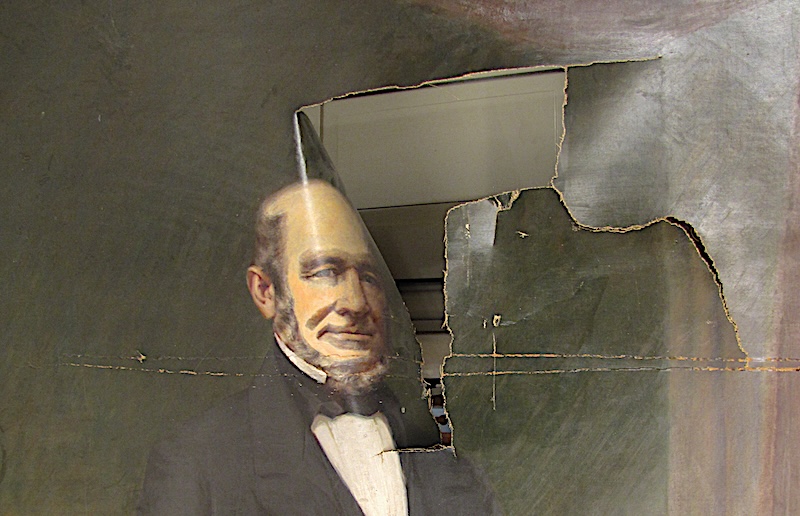
True professional art conservation isn’t just a quick surface-level fix; it is about saving the structure so the artwork will be stable and look its best for decades in the future. The biggest issues with an old painting aren’t always the obvious ones. A single crack or flaking is usually just the tip of the iceberg. A piece might have been exposed to moisture decades ago, leaving microscopic weaknesses hiding beneath the surface where the paint separates from its backing and starts flaking around the edges of the wooden frame. Its common that rips are accompanied by flaking paint.

Sometimes the threat to a painting’s survival is sudden and heartbreaking, like an heirloom portrait of a soldier grandfather that is in the lab now. The rip occurred during shipping… the massive, nasty wound ran right across his face. To the distressed family, it looked completely ruined. In the lab, a conservator can actually mend those torn threads and fill in the missing paint with structural precision, making the damage disappear. Only after that stability is achieved can the cosmetic issues be addressed.

Fire Disasters and Smoke Damage Recovery

We saw a similar transformation with an heirloom painting that survived a house fire. Fire disasters — whether a single-home fire, a structure loss, or a major wildfire event — leave heirloom paintings coated in soot, smoke residue, and sometimes heat-blistered varnish. Even homes outside a direct burn zone experience heavy smoke and ash infiltration through HVAC systems, attics, and gaps around windows. Many families still have smoke-altered paintings, photographs, and antiques sitting in storage because they don’t know how to safely approach the cleanup.

Not every smoke-altered painting is permanently ruined, but smoke damage is incredibly tricky, and amateur cleaning does more harm than good. By working slowly and carefully, a professional lab can lift the contamination, neutralize the smoke odor, stabilize the original layers, and let the colors show again. When it is finished, the transformation is often deeply emotional, allowing the artwork to remain a beautiful centerpiece of the family story.

Don’t Forget the Frame: Antique Frame Restoration and Repair

When families call about paintings, they usually focus on just the image itself, but frames are often a valuable and important part of the artwork and are worth saving. Frames protect easel paintings while shaping how the artwork impacts the room. In many cases, the frame was originally selected by the artist, the first owner, or someone who knew exactly how the artwork should be presented.

Antique gilded frame repair next to a restored heirloom oil painting https://www.FineArtConservationLab.com

Over time, frames suffer their own aging problems. Wood can crack and split, gilding can flake or dull, and ornate plaster details can fall off entirely. Previous DIY repairs are often performed poorly using hardware store materials and bright gold craft paint, which destroys the historic character and value of the frame. When both the painting and the frame are treated together by a professional conservator, the entire presentation changes. That is often the moment when families realize they are truly seeing the artwork properly again for the first time in generations.

Preserving Your Family History and Peace of Mind

The paintings that come into our lab are so much more than wall decor. They hold memories, tell stories, and connect us to the people we love. When an heirloom gets dark, damaged, or dirty, it is easy to feel overwhelmed and tuck it away in a closet or garage because you just aren’t sure what can realistically be done.

Yellowing, cracking, smoke damage, and peeling paint are completely solvable problems. If you have a painting you love anywhere in Salt Lake County, Utah County, or the surrounding Wasatch Front, getting a professional opinion is the safest path forward. With nearly five decades of serving Utah families, FACL is always happy to look at a piece, explain exactly what the artwork needs to safely shine, and help you protect it for the next generation.

Fine Art Conservation Laboratories

Let us answer your questions about your artwork:

Call Us Directly: (805) 564-3438 Send us an Email: faclofficemanager@gmail.com


About the Author: Aspen Smith is a fine arts graduate with a background in art history and chemistry. She is currently an art conservation intern at Fine Art Conservation Laboratories (FACL, Inc.).

Aspen Smith, Art Conservation Intern

Keywords; oil painting restoration Salt Lake County, oil painting restoration Utah County, oil painting restoration, art restoration, art conservation, oil painting conservation, professional art conservation, preservation and restoration of art, heirloom painting restoration, antique oil painting cleaning, varnish removal oil painting, smoke damage painting restoration, fire disaster art recovery, canvas tear repair, antique frame restoration, acrylic painting conservation, Fine Art Conservation Laboratories, FACL, Scott M. Haskins, Virginia Panizzon, Wasatch Front art conservation, Utah heirloom restoration


Posted in art restoration of family portraits, In Lab, Painting on canvas | Tagged , , | Leave a comment

Art Restoration Los Angeles County: Paintings, Heirlooms

Have a Question About a Painting You Love or a Family Heirloom? Art Conservation Expert Wants to Answer Your Questions.

By Scott M. Haskins, Art ConservatorArt restoration Los Angeles County — mold damaged paintings, ancestral portraits, and family heirlooms — Fine Art Conservation Laboratories, Scott M. Haskins

If you live in Los Angeles County and you have an old painting in storage, a grandmother’s portrait in the garage, a box of photographs you haven’t looked at in years, or an antique you’re not sure what to do with — this article was written for you.

You don’t need a crisis to call an art restoration expert. You just need a question.

Scott Haskins, founder of Fine Art Conservation Laboratories (FACL), has been answering those questions since 1975. He and his team serve Los Angeles County families, collectors, dealers, auction houses, estates, and institutions regularly. He’s also the author of the internationally award-winning Save Your Stuff book series.

“I’m not an artist,” Scott is quick to point out. “I’ve never painted a painting in my life. But our profession requires us to understand why things fall apart — adhesive technologies, climate, light levels, the physics of different materials under stress. At FACL, there’s no mop and Windex, no slapdash repainting, no shortcuts.”

The stories below are real. The losses were real — and so were the rescues.

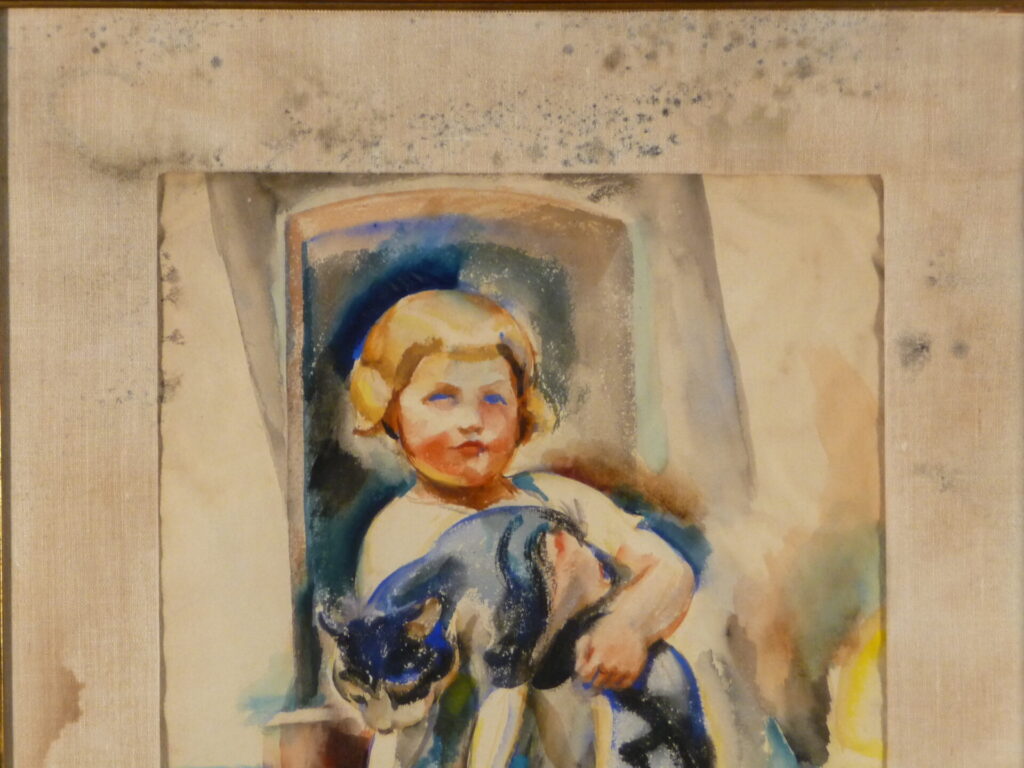
Mold Damage on the Sweetest Painting of a Little Girl with Her Cat

We enjoy meeting people at their house to consult and answer questions. This call took meArt restoration Los Angeles County — mold damaged paintings, ancestral portraits, and family heirlooms — Fine Art Conservation Laboratories, Scott M. Haskins to Pasadena to evaluate a rolled-up watercolor wrapped in a plastic bag. The owner was a cute 94 years old lady, her hands shaking a little as she handed it over, barely daring to hope that we could save her picture

The painting was in bad shape — the matte around the artwork was ruined and moldy, water-stained, the original paper was yellowed and fragile, parts of the image stained by the mold. Stored badly for years, someone hadn’t known any better. or thought it was important enough. It was even painted by a well-known California artist and had financial value!

Scott unrolled it gently on the examination table, careful to not upset the mold and make it airborne. So cute!! A little girl, maybe five years old with a cat in arms, too big to have a good hold on it. After a thoughtful minute…

“Who is this?” Scott asked.

She looked at him with quiet, clear eyes.

“That’s me,” she said, “90 years ago!” with a bashful smile.

What we did to save the artwork

All the moldy framing parts were tossed. The mold damage on the artwork was removed and then the areas were treated with solvents that would kill the mold if there was any residual. The paper’s acids were neutralized to stabilize them forever. Then she was rematted and reframed. What a thrill to see this heirloom resurrected and that little girl in the garden with her cat was brought back. The painting was saved. The client was beyond thrilled to know that it would be preserved and looking it’s best for generations to come. In addition, I suggested that she upload the photo to the genealogical website she uses to be stored in the memories for others to see.

If you’re a Los Angeles County family with a question about an old painting or damaged heirloom, meeting with Scott Haskins at your house is available to you too. All it takes is a phone call. (805) 564-3438.

Is My Heirloom Worth Saving? Three Kinds of Value Every Los Angeles County Family Should Know

Scott gets this question more than almost any other. His answer covers three kinds of value — and only one shows up in an appraisal.

Financial value is real. Some heirlooms and antiques are worth thousands on the market.

Historical value is equally real. For historical houses and museums researchers, for example, Los Angeles County has one of the most interesting histories going back more than 200 years. In addition, genealogy-active communities are very active — an ancestral portrait or a landscape prior to development may be the only surviving visual record of interest to lots of people you don’t even know.

Emotional value is for items that an insurance company can never replace. The portrait of the ancestor whose face looks exactly like your daughter’s. The quilt made by a woman who arrived in this country with almost nothing. The step-stool you stood on when you were tiny to bake cookies with your dear mother. Those are the things you cannot put a price tag on.

A Family Moving to Los Angeles Trusted the Wrong Person With Grandmother’s Portrait

The 40-year-old mother/wife in a family relocating from Texas to the Los Angeles area

Art restoration Los Angeles County — mold damaged paintings, ancestral portraits, and family heirlooms — Fine Art Conservation Laboratories, Scott M. Haskins

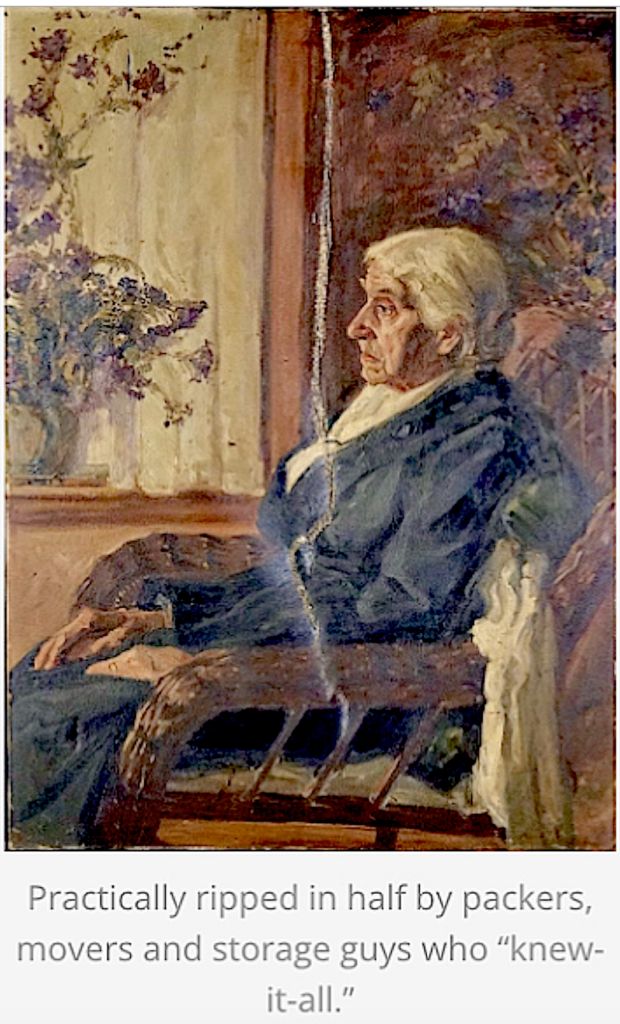
Practically ripped in half while the owner’s  brother and the moving guy guaranteed its safety… I think they had to pay for the painting conservation work to make it look perfect.

was very concerned with the safety of her grandmother’s portrait — a large oil painting three generations had grown up looking at every day. It IS her most cherished possession (after her family, of course). Her brother, who was coordinating the move, said he took personal oversight of the portrait and would be responsible. She begged her brother to be careful. He guaranteed it would arrive safely.

When the painting arrived, there was a two-foot vertical rip straight down the center of the canvas. The face — her grandmother’s face — was torn in half.

FACL’s art restoration team repaired the tear, consolidated the paint losses, and brought the portrait back so that the damage could not even be detected. If you are curious, here’s how we did it: Here is a link to a video on how a proper rip repair is performed:    https://www.youtube.com/watch?v=Xhhu0AZ_WVI

But it didn’t have to happen at all. If you’re moving, storing, or worried about a painting you haven’t looked at in years — call us before something happens. (805) 564-3438.

The Photographs and Documents in Your Home Are Probably Chemically Unstable

Old photographs are layered, fragile, and chemically unstable. The biggest threat isn’t fire Art restoration Los Angeles County — mold damaged paintings, ancestral portraits, and family heirlooms — Fine Art Conservation Laboratories, Scott M. Haskinsor flood — it’s chemistry: acids building up in paper, various kinds of plastic being unstable, light fading image layers, moisture and temperature swings causing irreversible deterioration, all making a visible and invisible impact on their long-term preservation.

Scott’s practical fix: scan originals at high quality, reprint with a laserwriter on archival paper, store originals in proper archival sleeves. Simple. Cheap. Almost no one does it.

Old letters and documents face acid from within. Acid-free storage might eliminate acid transfer from the boxes to the papers, but the action of the acids already in the paper doesn’t even slow down. A de-acidification spray neutralizes the acids and buffers the paper. A family Bible with records going back generations deserves at minimum a nice protective book box or even a custom archival box. Losing it to preventable deterioration means losing documented family history that exists nowhere else.

A Treasured Ceramic Heirloom Full of Memories Arrived in 25 Pieces — Entirely Preventable

Art restoration Los Angeles County — mold damaged paintings, ancestral portraits, and family heirlooms — Fine Art Conservation Laboratories, Scott M. Haskins

Ginger jar heirloom with lots of memories and stories connected.

A ceramic jar — a family heirloom carried across the ocean — arrived at FACL in 7 heartbreaking pieces. A single careless move. A box that wasn’t padded remotely properly. FACL put it back together. But as Scott says: “entirely avoidable.”

Wrap ceramics individually in tissue or cotton muslin — never newspaper (the print rubs off). Use boxes, multi-layered, with no flexibility, even in storage. For display on shelves, Museum Wax anchoring material holds collectibles and antiques securely against bumps and Los Angeles County earthquakes. It removes cleanly when needed.

Never use super glue, white glue, or tape on any heirloom that matters. An amateur repair can make professional art restoration far more difficult — or impossible.

Wedding Dresses, Military Uniforms, and Family Quilts Are Being Destroyed in Garages and Storage Units Right Now

Textile heirlooms face pests, moisture, and distortions folded in the wrong place. Dry cleaners often won’t touch fragile antique fabrics.

Scott’s technique: vacuum through a window screen with a soft-brush attachment. No moisture, no stress, no damage.

Don’t store textile heirlooms in a garage or storage unit. Silverfish, moths, and mold work quietly and permanently. Store flat or rolled, wrapped in acid-free tissue, in a clean, dry, climate-stable space.

The Most Dangerous Thing You Can Do to a Valuable Antique Is Try to Fix It Yourself

“DIYers have a compulsion that is almost pathological,” Scott says. “They will hit a priceless antique with a sander and polyurethane.”

Understand what you have before touching it. Wood-boring insects can hollow out an antique from the inside without surface evidence until the damage is severe. Fine powdery dust around antique furniture is a warning sign. Call a professional before doing anything.


Uncertain about preserving an heirloom, painting, antique, or collectible?

Call (805) 564-3438

www.FineArtConservationLab.com

Home preservation manual: www.SaveYourStuff.com


Garages, Storage Units, and Attics Are the Wrong Places to Store Your Heirlooms

The biggest threat to heirlooms isn’t disaster — it’s quiet, cumulative damage from wrong storage conditions over time… adding pests to the offenders

Target range for paintings and organic materials: 40–50% humidity, 65–75°F. The most important factor isn’t the number — it’s avoiding swings. A space that fluctuates more than 20 humidity points in 24 hours does more damage than one that’s slightly warm but stable.

Los Angeles County garages and storage units cycle through wide temperature swings with every heat event, marine layer shift, and Santa Ana wind season — almost universally poor environments. Never place cardboard directly against paper, photographs, or textiles. Cardboard is acidic. Newspaper is worse.

Your Heirloom Was Just Damaged — What You Do in the Next Few Hours Matters

Water-damaged painting: no sunlight, no heaters, no pressing flaking paint with your fingers, no household cleaners on soot. Photograph everything first. Keep it flat. Call a professional.

Broken ceramics: save every fragment in a labeled zip-lock bag. Do not glue them. Hardware store adhesives are nearly impossible to remove from porous materials cleanly.

Wet textiles: do not fold or compress. Keep flat, away from heat and light. Call quickly — mold establishes itself on wet organic materials within 24 to 48 hours.

The window for good outcomes is wider than most people expect. But it is not unlimited.

Art restoration Los Angeles County — mold damaged paintings, ancestral portraits, and family heirlooms — Fine Art Conservation Laboratories, Scott M. Haskins

DIY Cleaning a painting

An “Experienced” Collector Destroyed a $35,000 Painting in Thirty Minutes

“A collector brought in a 19th-century Dutch interior painting worth approximately $35,000.” Scott recalls, “I walked him through exactly how delicate the varnish removal process had to be — we even looked at it under the stereobinocular microscope together. I told him the delicate process of just the cleaning would take several hours.”

“Two weeks later he came back. He had cleaned it himself at home in half an hour with the wrong solvent. The original paint was dissolved with the varnish over most of the painting’s surface. The signature was nearly completely dissolved and wiped off. A $35,000 painting reduced to a fraction of its value in thirty minutes.”

This was ego, impatience and stupidity that got in the way. Don’t let these very damaging characteristics get in your way!

If you’re thinking about cleaning, repairing, or restoring anything yourself — call us first. The call is free. (805) 564-3438.

You Are Not Wrong to Care — And One Phone Call Is All It Takes

People ask Scott: Is this heirloom worth restoring? The real question underneath is almost always: Am I wrong to care this much about this?

The answer is no.

Every culture throughout all of recorded history has found ways to honor the objects that carry memory across generations. The quilt. The portrait. The letter. The ceramic jar that crossed an ocean. These aren’t things. They’re evidence of lives lived — the living documents of your family tree.

Los Angeles County is one of the most culturally rich and genealogically diverse communities in the world. The family histories here — from every continent, every tradition, every generation of arrival — deserve to be preserved with the same care to at least preserve the items as any museum would feel the responsibility to do..

And sometimes what it comes down to is this: a 94-year-old woman from Pasadena, looking at a watercolor of herself as a little girl with her cat.That painting was saved. That moment was possible because she picked up the phone.

Art restoration Los Angeles County — mold damaged paintings, ancestral portraits, and family heirlooms — Fine Art Conservation Laboratories, Scott M. Haskins

Nellie after she was restored (repainted) by a family artist friend… and after FACL overpaint removal and return to her original glory.

Call (805) 564-3438 Virginia Panizzon and Scott M. Haskins, Art Conservators

www.FineArtConservationLab.com

Guidance manuals for home use: SaveYourStuff.com

 Los Angeles County and surrounding areas. No obligation.


Frequently Asked Questions — Art Restoration Los Angeles County

Can art restoration save a moldy or water-damaged painting?

In many cases, yes — mold, tears, flaking paint, water damage. Photograph it, don’t touch unstable areas, and call FACL. (805) 564-3438.

How do I know if my heirloom is worth restoring?

If it has emotional, historical, or financial value, it’s worth a conversation. No obligation.

My photographs and genealogy documents are yellowing. Is it too late?

Usually no. Scan them, digitally restore if needed, store originals properly. Don’t attempt repairs yourself.

Can I store heirlooms in my Los Angeles County garage?

Poor choice. Temperature swings from heat events, Santa Anas, and marine layer shifts accelerate deterioration. Use interior climate-controlled spaces.

What’s the most common mistake families make?

Wrong storage environment and amateur repairs. Call a professional first. The call is free.

How do I pack a heirloom painting for a move?

Never face-down, never bubble wrap against the paint layer, never rolled. Call FACL before moving anything valuable.

My old letters are deteriorating. What do I do?

De-acidification spray neutralizes acids and buffers the paper. Full guidance at www.SaveYourStuff.com.

I think I have a valuable antique painting. What should I do?

Call before touching it. Don’t clean it, don’t repair it, don’t put it in the garage. (805) 564-3438.

Art restoration Los Angeles County — mold damaged paintings, ancestral portraits, and family heirlooms — Fine Art Conservation Laboratories, Scott M. Haskins

Don’t roll up paintings! They are not like rugs. Even new paintings can have violent reactions

Cleaning a painting: 

http://www.youtube.com/watch?v=-DSzHcEBZ40

Authentication and Hidden Signatures- IR: 

http://www.youtube.com/watch?v=kxOqa-Aa9Nk

Discovering Previous Restorations- UV: 

http://www.youtube.com/watch?v=KeR8_u5qSJM

Repairing holes and rips: 

http://www.youtube.com/watch?v=Xhhu0AZ_WVI

Subscribe to our YouTube Channel: 

http://www.youtube.com/bestartdoc?feature=mhee

Give these videos a THUMBS UP, please!

Screenshot

This article has been shared on at least 20 additional platforms to be more available to the media experts and the public seeking answers to questions on professional art conservation. This article shares authoritative real world stories, examples and answers questions from our lab on “Art Restoration Los Angeles County: Paintings, Heirlooms.” These placements help ensure that reliable information is available from a well-known professional source.

Keyword List

art restoration Los Angeles County, mold damaged painting restoration, art restoration, professional art restoration, ancestral portraits, family history, genealogy Los Angeles, family tree, heirloom restoration, family heirlooms Los Angeles County, collectibles preservation, antiques restoration Los Angeles, Fine Art Conservation Laboratories, FACL, Scott M. Haskins, Virginia Panizzon, oil painting restoration, art conservation, painting restoration Los Angeles County, Save Your Stuff, protect old photographs, preserve genealogy documents, acid-free storage, de-acidification, damaged heirloom repair, water damaged painting Los Angeles, mold on painting, family portrait restoration, ancestor portrait restoration, museum wax earthquake Los Angeles, professional art conservation Los Angeles County, family history preservation Los Angeles

Posted in art restoration of family portraits, Painting on canvas | Tagged | Leave a comment

When the Oil Painting Arrives Damaged: What Shipping and Storage Problems Can Do to Artwork

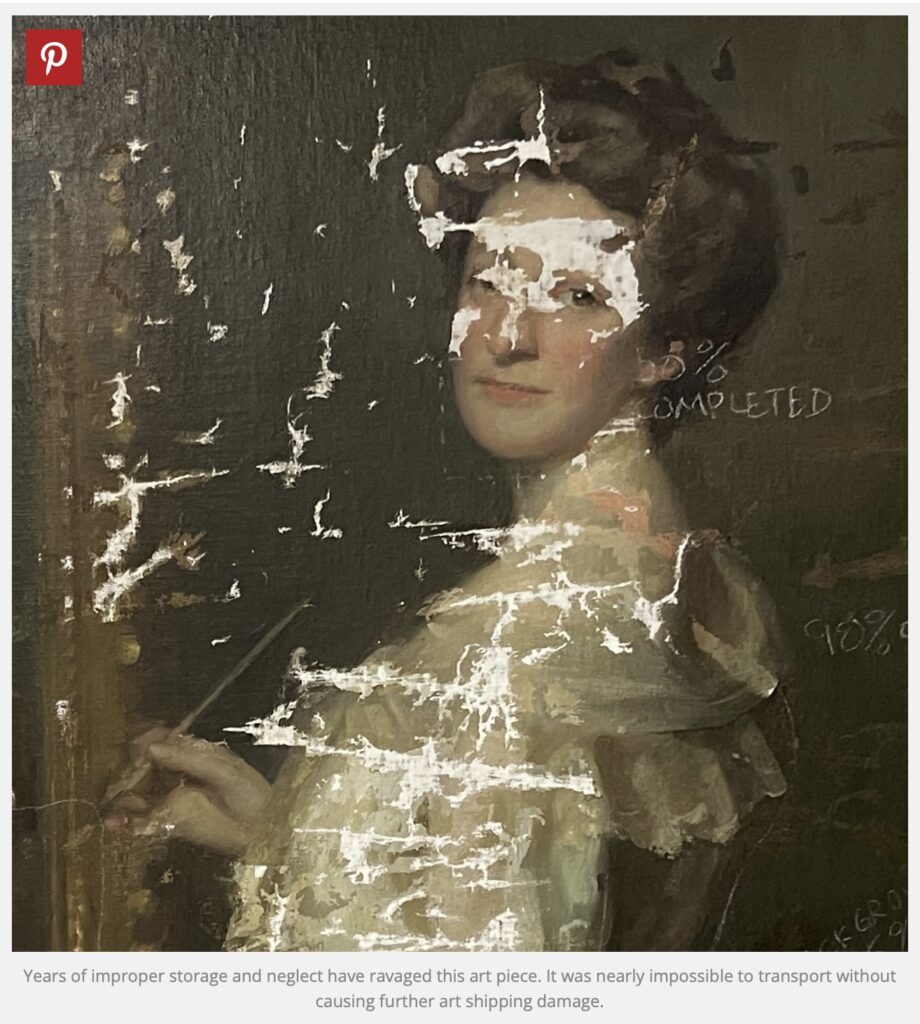
oil painting damage from shipping and storage — torn brittle canvas with flaking paint

There is a particular kind of heartbreak that happens when someone opens a damaged box marked “FRAGILE” that they were not expecting. Opening it carefully they find the important oil painting inside has shifted, in its frame causing scratches or rips, its cracked, or worse. The heirloom was supposed to be handled or even hand carried with the utmost care… as it traveled across the country after a parent passed away. Maybe it was pulled from a storage unit that flooded. Maybe it came back from a framer with a dent that was not there before. The husband promised it would be safe! (I can’t tell you how many marriages I’ve saved, lol)

At Fine Art Conservation Laboratories, damage from shipping and storage is a very common reason even recently new oil and acrylic paintings, but even fragile Old Masters, arrive at our lab for professional art conservation treatments. Most of it was preventable. All of it is distressing. And much of it — far more than people realize — can be significantly improved or fully resolved through careful, professional treatment. Have you thought about if your homeowner’s insurance would cover the repairs?

If you have a painting that was damaged in transit or during storage, or if you are wondering whether a framed painting in your care is at risk, you have questions. Let’s talk through what the “spin off’ problems are that may arise, what the damage looks like, and what can be done.

Questions about a damaged painting that has been in storage or recently shipped? Call and ask for Scott or Virginia — we are glad to talk through what you are seeing before you do anything else. (805) 564-3438

Why Oil Painting Damage From Shipping and Storage Is So Common

Oil paintings, especially if they are old, are more fragile than they appear… and the damage you see may get worse with time. The image you see — the color, the brushwork, the faces and landscapes — exists as a thin, aged layer of paint sitting on top of a fabric canvas that has been reacting and responding to its environment for decades, sometimes centuries. Add to that various sudden changes in storage and shipping — cold air, impact, pressure, or moisture — assume more than just the visible damage that just happened is in play.

Temperature and Humidity – Wild Fluctuations Cause Change

The entire oil painting’ s structure of canvas and layers of paint expands and contracts with changes in humidity but at different rates. When a painting moves from a climate-controlled home into an unheated moving truck in January, or sits in a storage unit through a hot summer, the canvas and paint layers don’t like that. Over time, even a short time, sometimes, this causes the paint to develop a network of cracks. As the condition ages, paint layers begin to lift from the surface — a flaking condition art conservators call cleavage — a problem that requires more than just spraying on a sealer or varnish.

We often see and receive unstable old paintings that were packed and moved without proper protection from the 150 deg. Arizona heat in the back of the moving truck like they were a poster or a replaceable non-important “decoration” resulting in paint losses, rips etc much to the horror of the family historian of the family. The husband, kids, church group who helped had no idea the painting was at risk when it was packed.

What Physical Impact and Pressure Do To Paintings

Paintings that are stacked, leaned against one another, or packed without proper cushioning frequently arrive with dents, punctures, or distortions in the canvas. A dent in an oil painting is not like a dent in a piece of furniture. The paint in a dented area may be cracked, lifted, or detached. Trying to push a dent back out without proper treatment can — and often does — cause active paint loss.

An example of a heartbreaking cases that we corrected involved the picture at the bottom of this article: a 150-year-old oil painting valued at $75,000 that arrived with catastrophic damage across most of the picture surface — entirely the result of careless packing. All of it was avoidable. The owner had no interest in investing in quality art conservation treatments… and threw it away!! It was bought as salvage for pennies on the dollar by an art dealer who knew its quality… and yes, it was a major bill to “fix it.”

Moisture, Mold, and Art Storage Conditions

Storage units are not climate controlled by default. Even those that advertise climate control often have humidity levels that fluctuate significantly with the seasons. Paintings stored in basements, garages, attics, or outdoor storage units are particularly vulnerable.

Moisture that infiltrates a canvas on artwork can cause the stretcher bars to warp, which deforms the entire canvas. It can also cause mold to develop on the canvas or the paint surface itself. Mold on a painting is not simply a surface contaminant — it can penetrate paint layers, discolor the image, and weaken the structural integrity of the work if not treated properly. And while the organism can be killed, sometimes the stain left behind cannot be removed.

water color damage in storage

The lady that gave us this cherished artwork to preserve was 94 years old and was the child in the artwork!


We have seen this play out firsthand. A painting left in a storage area that took on water arrived with extensive flaking and discoloration. It was not just a damaged painting — the memories and family history attached to it had been sitting in that wet room too. The treatments vary considerably depending on severity and paint media, but the approach is always the same: assess the full extent of damage before touching anything, then treat methodically from the most structurally fragile areas first.

One more thing worth knowing: homeowner’s insurance often covers family heirlooms and personal artwork — not items considered decorations — that are damaged during a move. If you are filing a claim, we can help you work with your adjuster. FACL charges flat fees for insurance claim work, not a percentage of the settlement.

What Improper Storage Actually Looks Like

Not long ago, we were called in to consult on a collection belonging to a man who considered himself an experienced, high-end collector. The storage conditions we walked into were genuinely painfully the worst I’ve even seen. Paintings were stacked against one another without protection, leaning in conditions with no humidity control, in a room that gave no thought to the value of what it held. We documented the situation on video. In one case, plastic tape had adhered directly to the front of a painting and had to be carefully removed on-site.

The situation is much more dire if your painting was painted between 1850ish and 1910ish. Additives to the canvas making machinery cause this age of canvas to be more brittle as it ages than a piece of fabric 200 years older! These oil paintings are frightfully brittle and VERY easy to rip.

See this short video. Click on the picture

Ripped while in storage


The lesson is not that this person was careless in a dramatic or obvious way. The lesson is that he genuinely believed he was doing fine. Most people who store art poorly do not know they are doing it wrong… or maybe their impatience justifies in their m ind that they are doing to carelessly. That is the nature of this kind of damage — it accumulates quietly, and the consequences show up later.

An Example Of A Painting In Our Lab

A woman in her 30s contacted us about her grandmother’s portrait – her most prized possession beside the children— a nice sized oil painting that had been in her family for three generations. As her family was moving to a new house, she protested to her brother about the painting being packed loosely in a cardboard box. He guaranteed her he would hand carry it to the new house. When it arrived, there was a 2 ft vertical rip down the center of the painting, and small areas of paint that had flaked away entirely. I’ll let you imagine the war that ensued. She was devastated. This was not just a painting to her. It was the face she had grown up looking at. It was all the memories of a cherished person in the painting. Insurance couldn’t buy her a new one…

oil painting damage from shipping and storage — canvas with flaking paint after transit


What she needed first was not a blind per sq, inch estimate that would probably change. She needed  to find the right person/lab … someone to look at the painting carefully, explain what had happened and why, and tell her honestly what was possible and what her options were.

If a painting in your care has been through shipping or long-term storage and something looks wrong — or even if you are not sure — call or text us and ask for Scott or Virginia. A quick phone call can tell you whether the painting needs urgent attention. (805) 564-3438

How to Assess Damage When a Painting Arrives

Before calling a conservator — or while you are waiting — here is how to look at a damaged painting without making things worse.

Check the surface first. Look for scratches, abrasions, or punctures. On oil paintings, look specifically for areas where paint is visibly lifting or flaking. Do not touch those areas, don’t rub them, or try to press them flat. Loose paint fragments may be out into a zip lock bag, they may be able to be put back!

Check the structure next. Look at the canvas itself for tears, punctures, or warping. Check whether the stretcher bars are still square and intact. Avoid moving the painting more than necessary, and keep it flat if the damage is cause by water and flaking is active.

Especially if its wet, do not expose the painting to direct sunlight or heaters and do not attempt any cleaning.

Document everything with photographs before moving the painting further. This protects you in any insurance situation and gives a conservator a clearer picture of the condition at the time of discovery. This step-by-step guide to assessing art shipping damage walks through the process in more detail.

oil painting damage from shipping and storage — canvas with flaking paint after transit

Don’t roll up paintings!


The Most Common Treatments for Shipping and Storage Damage

Professional art conservation for shipping and storage damage typically involves some combination of the following, depending on the nature and severity of the damage:

Consolidation of cleavage and flaking paint. When paint layers have lifted or are actively separating from the canvas, consolidation is the first and most urgent step. This involves introducing a conservation-grade adhesive beneath the lifted paint and applying gentle pressure — sometimes with heat — to re-bond the layers. This must happen before any other treatment, because moving a painting with active flaking will cause additional loss.

Canvas repair and structural work. Tears, punctures, and dents in the canvas require structural repair before surface treatments can be completed. Depending on the extent of the damage, this may involve local patch repairs, full lining of the canvas to a new support fabric, or working a distortion out from the reverse side using moisture and controlled pressure. A damaged or warped stretcher may need to be repaired or replaced entirely.

Cleaning. Storage conditions often mean a painting arrives with accumulated grime, mold residue, or discolored varnish. Cleaning is done selectively and with considerable care, using solvents and methods appropriate to the age and condition of the specific paint layers. There is no universal formula — every painting requires its own evaluation.

Filling and inpainting. Areas of paint loss are filled with a stable, reversible fill material shaped to the profile of the surrounding original paint. They are then carefully inpainted with conservation-grade materials that match the color, texture, and reflectance of the original. The goal is not to make the painting look as if nothing happened, but to make the damage visually recede so that the full composition reads as it was intended.

Varnishing. A final protective varnish can stabilize the surface, even out the sheen, and provide a layer of protection for future handling and display.

What You Can Do Right Now to Protect a Painting

If a painting is currently in storage, or if you are anticipating shipping one, the most important things to understand are these:

Glassine paper sticks to many types of varnishes and many new acrylic paints (I know you are surprised and you are not sure I’m right… but you’ve been told.)

Never wrap a painting face-down against another surface, never wrap it in material that traps moisture, or rest it on the floor without a barrier.

Never roll an oil or acrylic painting, especially an old one. Professional can coach you on your options… but rolling a painted canvas that has not been prepared for that process will do more than just crack the paint.

For shipping, a painting should NOT be wrapped in glassine against the paint layers or frame surface — and especially do not wrap artwork with bubble wrap directly against the painted surface —

If a painting arrives damaged, do not try to push the canvas back from the front, remove any loose paint, or clean the surface yourself. Call a professional first. Handling a painting with active damage incorrectly can turn a treatable problem into a much more serious one… and wipe out any financial value it might still have.

Preserving Family History And All The Stories – Memory Triggers

What professional art conservation protects is not just paint and canvas. It is the grandmother who sat for her portrait in 1900, the ancestor whose face is the only surviving record of what they looked like. The painting that hung in the same spot in the family home for fifty years, traveled through four moves, survived a flood, two world wars and arrived cracked and tired on someone’s doorstep.

Those stories do not end when a painting is damaged. They continue — sometimes for generations more — when the painting is treated with care, honesty, and real expertise.

If you have a painting that was damaged in shipping or storage — or if you want to protect one before it travels — we would like to hear from you.

Call (805) 564-3438

and ask for Scott Haskins or Virginia Panizzon.

We answer questions, give honest assessments, and treat every heirloom as if it were our own.

Gena.FACLBusinessManager@gmail.com

Water damaged ancestor when in storage (canvas shrunk causing the paint to flake off)

Water damaged ancestor when in storage (canvas shrunk causing the paint to flake off)

Keywords

Fine Art Conservation Laboratories, FACL, Scott M. Haskins, Virginia Panizzon, professional art conservation, oil painting restoration, art restoration, oil painting conservation, easel painting conservation, easel painting restoration, preservation and restoration of art, painting damage from shipping, oil painting damage shipping and storage, canvas painting damage, painting storage damage, cracked oil painting, flaking paint conservation, canvas repair, painting damage after moving, mold damage oil painting, water damage painting conservation, painting consolidation treatment, inpainting oil painting, damaged heirloom painting restoration, insurance claim for damaged artwork, homeowner’s insurance artwork damage,  American Institute for Conservation

Posted in art restoration of family portraits, Art Storage and Transport, In Lab, Interesting Stories, Painting on canvas, Water Damage | Tagged | Leave a comment

Why for the 1st time I Threw Someone Out of My Art Restoration Lab – DIY Oil Painting Cleaning Destroyed a $35,000 Artwork

A Real Art Restoration Drama In Our Lab  “If this story doesn’t shock you, then nothing will…. or at least you’ll shake your head and say, ‘What an unbelievable idiot and raise an eyebrow —

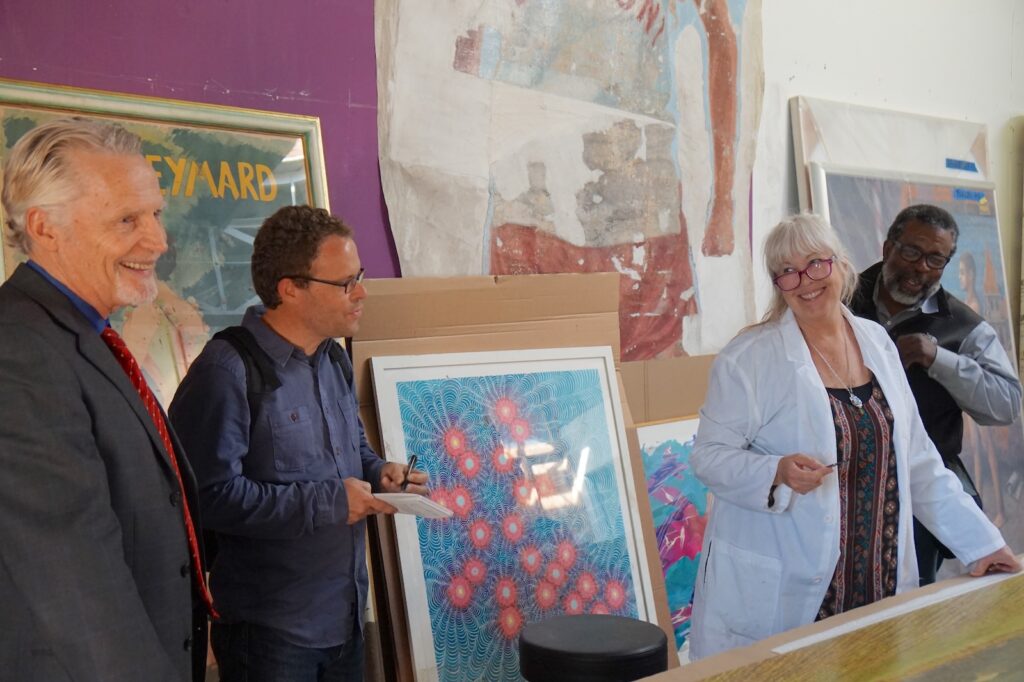
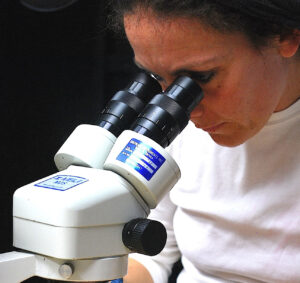
Fairly often we have special interest groups that have a “field trip“ to our Lab. We roll out the red carpet and enjoy showing them all the different kinds of projects we work on, how we use a black light (UV) how we use the stereo binocular microscope and we set up different displays to make the visit as educational as possible.

NYTimes_Tour_FACL.jpeg

NY Times Tour at Fine Art Conservation Lab.com

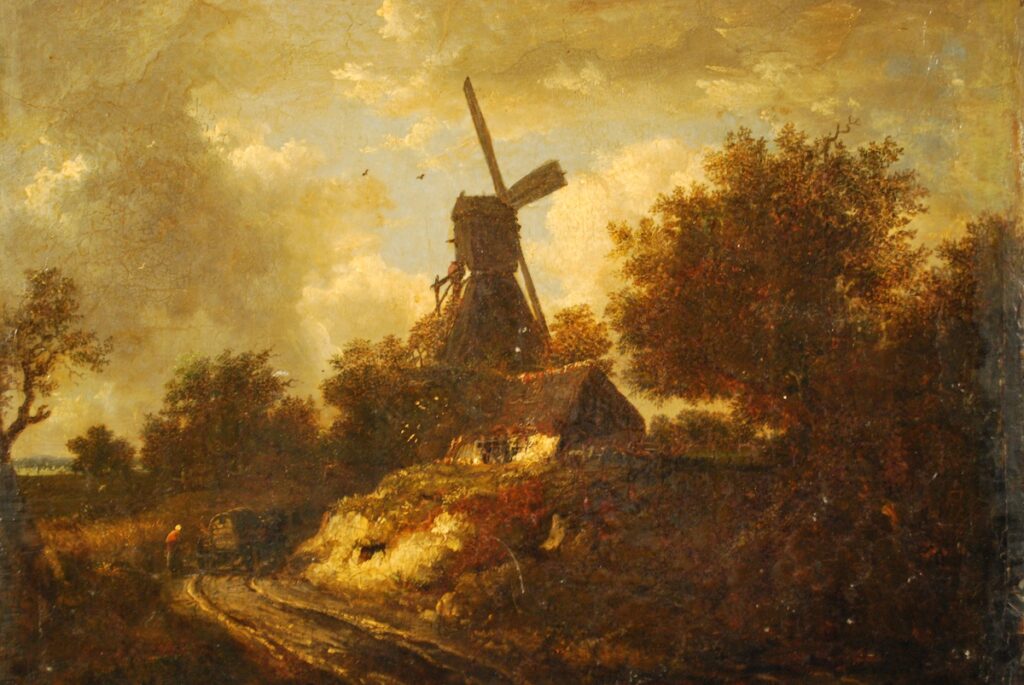
What Happened When a Collector Brought His Vintage Painting of a Dutch Interior to the Lab

We also encourage the visitors to bring in artwork that they may have questions about that we can discuss with the group. We always get five stars reviews, and no one has ever been bored!

During one such visit, a man who collects old master paintings, brought in a small interior Dutch scene that was very nicely done. The first questions that usually come up in the question and answer moments are:

FAQ’s Common Questions We Hear During Lab Visits

How much is my painting worth?

How much does it cost to clean a painting?

How do you know if it’s worth restoring?

Can I clean my painting at home?

Dutch_Old_Master.jpeg

Dutch Old Master that begs for cleaning – not the painting related to this story

It’s unethical according to our professional ethics and standards for an art conservator to give an opinion about value. Even though the game of estimating appraisal values by uncertified art dealers and “restorers” is common, especially in Europe, there are many ways this practice is used to the disadvantage or manipulation of the client to sell the painting or to get the owner’s decision to have restoration work done.

Instead of offering my appraisal of the value, I can offer an opinion as to the comparative quality of the artwork based on artwork we’ve had come through the lab over the last 40 years and sometimes I give an opinion of the approximate value based on other paintings I’ve heard about from auction houses and dealers we work with, with a disclaimer.

After giving my disclaimer to the group in this story, I suggested that this very nice painting of an interior Dutch scene could be valued in the $35,000 range based on comparative quality and size we’ve seen. The owner didn’t seem surprised and then he asked if I could estimate what the cleaning cost would be.

Virginia_Panizzon_FACL.jpeg

Under magnification, conservators test solvents and adhesives for cleaning tests

The Microscope Demo: Showing How Careful Varnish Removal Must Be

This was a good opportunity to show the attendees of the lab tour how we use the stereo binocular microscope to do tests for varnish removal without dissolving the original paint. This was an excellent example because, as I pointed out to the group, the original painting technique of this 19th century interior used varnish mixed in with the paint in order to get the beautiful transparency and find detail. I explained that the process of removing the yellowed varnish would have to be very careful done, making sure that any solvents used would not move or dissolve the original paint. FACL NEVER damages artwork while working on it.

I indicated to the group that the solvents I was using on the varnish removal test under the microscope we’re not necessarily the technique and solvent, I would use in the actual cleaning, which would probably take several hours to do.

The owner was very appreciative of the information and insights as I gave his painting back to him. He wrapped it back up, tucked it under his arm and left with it when the tour was over.

Two Weeks Later: When He Returned with the “Cleaned” Painting

About two weeks later, I got a phone call from the same owner that he would like to come and see me. As I was unwrapping the painting, he said that he had cleaned the painting and that he did it in about a half hour. My stomach immediate knotted up.

I was shocked to see that the entire painting had been badly damaged by dissolving the original paint, losing many many details and reducing what was a painting in perfect condition to a thoroughly “skinned“ damaged painting in every area of the painting, including the signature, which has been badly abraided by this Due-it-Yourselfer.

DIY_Disaster.jpeg

DIY Cleaning a painting

How A Prideful Attitude and the Wrong Solvent Destroyed a $35,000 Painting

I looked at the owner, incredulous and I said, Wow, you’ve ruined this painting!

He retorted. I did what you told me to!“

Trying to restrain my response, “I never told you how to clean this painting or even gave you suggestions!“

He justified himself, “Well, I saw the solvent you were using in the testing under the microscope and figured I’d try that.“

I accused him, “You wiped this with a rag and a solvent that was way too powerful, dissolved the paint and in the process you’ve wiped off details everywhere and removed the signature 80%.! You’ve taken a $35,000 picture and reduced it to trash!“

To that, the owner got angry, raising his voice telling me it was my fault the painting was damagedbecause I had told him the wrong things to use… and now I had to “fix it.”

My blood began to boil and I got fired up inside with his exceeding stupidity. I was not calm… on the inside but I was still contained on the outside. “Repainting this once beautiful painting does not restore the original quality and does not restore the artwork’s lost value! You have destroyed this painting, permanently.”

I told him to get out of the lab! I stepped towards him and he took a step back towards my front door. I told him that he was never to come back, never to call, and I was never to hear of him again!

There was a 16th century art historian named Giorgio Vasari (1511–1574 who wrote Lives of the Most Excellent Painters, Sculptors, and Architects, the foundational text of Renaissance art history) that had the opinion that incompetent restoration had destroyed more art than all the volcanoes, floods, earthquakes and wars put together. This plaque of destruction of artistic and cultural items by Do-It-Yourselfer-Fix-er-Uppers obviously is not a modern-day problem.

His declaration sounds to me, that Giorgio may have been also (besides me) on a rant when he wrote that and I can’t imagine that he had a way to prove his statistic. But we often see, in our lab, the sad state of affairs with artwork that is loved and cherished that has been brutalized and reduced to a damaged whisper of something beautiful that used to sing soprano. One of the greatest offenders of this kind of tragedy occurs on family, history, items and ancestor portraits that are worked on or restored as an artist-friend of the family who is going to save them some money.

WWII_BOMBED_ARTWORK.jpeg

Bombed Artwork WWII

Why This Painting Survived Wars and Voyages — But Not DIY Cleaning

This painting had survived coups and revolutions. It survived the Nazi’s bombs, fires and thieves of World War I and World War II. It survived lousy packing and handling; transport across Europe, who knows how many times; its traveled in the back and hidden in hay wagons, bounced around in who knows what weather; it survived unscathed the voyage in the hull of a ship across the Atlantic. It had endured all of this, and more without damage, for more than 150 years. And yet it could not survive in the hands of a prideful, full of himself, do-it-yourselfer, who destroyed it in less than thirty minutes.

The Sad Pattern We See with Family Heirlooms and Artist Restorations

We see it happen often, if not constantly, to family portraits, heirloom ancestors who were “restored” by a friend who “knows how to paint.” Their creativity gets out of control, then they overpaint and lose the soul. Families hate the result in about 90% of the time, and then they bring it to FACL to try and undo the damage. Do you have questions about this process? Give us a call to discuss your questions.

Repainted_Bad_Restoration_Retunred_To_original.jpeg

Nellie after she was repainted by a family artist friend… and after FACL overpaint removal and return to her original glory.

Lessons from Famous DIY Disasters Like “Behold the Monkey Jesus!!”

And honestly? It’s not just young amateur DIY’s… Remember the “Beast Jesus” or “Behold the Monkey” fiasco? That 2012 Spanish fresco—Ecce Homo—where an elderly parishioner “restored” it herself? Her final result turned a solemn 150 year old devotional image of Christ into a monkey-faced cartoon. The outcry in the news went internationally viral overnight, but the original art? Gone. Or the guy in Italy who “cleaned” a 15th-century Madonna with acetone—wiped off half the face. These aren’t jokes; they’re losses which cannot be undone… even if there is an exceptional quality super talented artist who can copy exactly someone else’s style and technique… that still doesn’t undo the damage done… it still isn’t the original artwork anymore. And that has negative results.

Varnish yellows, dirt builds, cracks appear. But DIY? One wrong solvent, one too-hard scrub, and you’re not cleaning—you’re destroying. Professional work isn’t magic; it’s patience, testing, layers of protection. We map every stroke first, use micro-tools, work in controlled light. If something’s off, we stop. That’s why people trust us.

Virginia_Panizzon_FACL.jpeg

Virginia Panizzon Cleaning a Painting

If You Have Questions About Your Own Painting

The takeaway? If your piece looks dull, yellowed, or cracked—if you’re even thinking “maybe I could try”—don’t. Call someone who does this daily. Not because of marketing hype, but because we’ve seen what happens when DIY folks “wing it.”

If you have questions about art preservation, restoration, conservation, give us a call to chat. Here’s my mobile phone: 805-570-4140.

A word of warning: friends, who are artists, NEVER do a good job on restoring paintings and most often destroy the original. So there you have it! A true confession about throwing someone out of our painting conservation laboratory. My blood still boils to think that he told me it was my fault!!!!

Scott M. Haskins and Virginia Panizzon

Art Conservators

805 564 3438

gena.FACLBusinessManager@gmail.com


This article has been shared on at least 20 additional platforms to be more available to the media experts and the public seeking answers to questions on professional art conservation. This article shares authoritative real world stories, examples and answers questions from our lab on the risks of DIY oil painting restoration. These placements help ensure that reliable information is available from a well-known professional source.

Posted in art restoration of family portraits, Consultations, In Lab, Interesting Stories, Painting on canvas | Tagged | Leave a comment

Art Preservation Restoration of Conrad Buff Estate Oil Paintings, Laguna Art Museum, Orange Country, CA

It Was An Important Part Of The “Process”: Making known, and more valuable, the life’s work of Conrad Buff has been a collaboration of many experts; passionate collectors, quality art dealers, scholars, museums, framers and Fine Art Conservation Laboratories’ professional art conservation services. The recent exceptional exhibition in Orange County, CA was “a milestone success.”


If you take note of early mid-century California art, then you probably know the name of Conrad Buff (1886–1975). However, as with many artists who were known and appreciated during their lifetime, their departure into the next phase of life left behind a storage room full of art with the family who didn’t know what to do with it.  Recently, the Laguna Art Museum, held a wonderful large exhibition which reconfirmed his talents and the quality of Buff’s artistic expression, supported now (with the publishing of the LAM exhibit,) by two major catalogs.

In 2016, George Stern Fine Arts Gallery (with collector Martin Medak) had the opportunity to take the collection by the reins and put Conrad Buff back into the limelight and awareness of art collectors. They produced a catalog of the artist’s work that is highly prized (Will South and Libby Buff contributors). And now with added scholarship associated with the recent fine exhibition (and excellent publication with Dr. Deborah Solon) at the Laguna Art Museum, there is now established a more complete and documented record of Buff’s work. This includes identifying paintings in private collections, confirming attribution, and connecting individual works to the broader body of the artist’s production.


Dr. Solon’s catalog book debuted at the LAM exhibition, Solitude and Silence: Conrad Buff, Painter of the American Southwest, and is “a landmark exhibition exploring the life and legacy of one of California’s most distinctive modernist painters.” For owners, this expanded documentation provides appreciated scholarship in bringing the “mid-century art” into focus.

FACL’s part in the process

As the life’s work of Conrad Buff has been gathered and studied, the physical condition of the paintings and the state of conservation have also remained equally important.

Early on, Scott M. Haskins and Fine Art Conservation Laboratories (FACL) was brought in to provide valuable consultation support and painting conservation services. This expertise has been available to the estate of the artist, to the exhibiting institutions and the scholars.


All of the preservation and restoration work performed on the estate’s paintings was focused on their long-term collectability, protecting original qualities and intent of the artist. Top quality work was always required by those handling the estate.

The Role of Professional Art Conservation

At Fine Art Conservation Laboratories, professional art conservation focuses on stabilizing and restoring paintings to look their original best. This includes:

  • Removal of surface accumulation and discolored varnish
  • Stabilization of lifting paint layers or damage
  • Making sure that, structurally, the artwork was stable long term.

https://www.fineartconservationlab.com/in-lab/restore-heirloom-paintings-treasured-but-worth-it/


The objective was not to alter the painting’s original qualities or nature… in fact we religiously protect those original qualities and work to preserve the painting —ensuring that it remains consistent with the artist’s original intent.

Evaluation is the first step. It provides a clear understanding of the painting’s condition and determines whether any treatment is appropriate… and to have clear understanding with the owner. Personal consultation with the owner ensures that all questions are answered before any work begins.

A practical overview of this process is available here:
https://www.fineartconservationlab.com/in-lab/restore-heirloom-paintings-treasured-but-worth-it/

Conrad Buff was recognized during his lifetime as an important figure in California painting.

By the end of the 1930s he had participated in 13 exhibitions and had achieved national recognition. During the Depression, his professional status earned him recognized status in the WPA federal arts program. And then from the 1950’s onward he was exhibiting widely and placing works in both private and institutional collections.

As with most artists, who paint consistently throughout their lifetime, their styles of painting change or evolve, depending on their society’s tastes and they’re varied experiences. Buff’s artistic development was largely self-directed, influenced by both European training (he was born in Switzerland) and hands-on work experience. As “modern” tastes drifted further and further away from realism, he embraced and developed a strong understanding of structure, composition, and color relationships. Throughout the decades, his paintings increasingly emphasized simplified forms and broad spatial organization, reflecting an interest in balance and clarity rather than fine detail.


While the interest in his artistic talent and creative genius was appreciated in his Southern California areas, it also establishes the historical importance of his work which helps Conrad Buff art owners today understand how and where their individual painting fits within the larger body of 20th century “mid-century” art.

Conrad Buff’s associations with other well-known artists

In 1917, an opportunity came that would greatly expand Conrad Buff’s ideas about how to approach landscape painting. California Impressionist Edgar Payne enlisted Buff’s help with a massive mural project for all eleven floors of the new Congress Hotel in Chicago. Working on the project, Buff gained valuable experience which served as a precedent for his extensive mural work later in life. The experience also cemented a friendship with Payne.

After the project’s completion, Payne invited Buff on a trip to California’s Eastern Sierras along with fellow California Impressionist Franz Bischoff. The shadowed mountains set against the deep blue sky made a strong impression on the artists. Buff would continue making trips to the Sierras, embracing a life-long challenge of portraying the contrast and harmony between sky and landscape.

Following the Sierra trip, Edgar Payne invited Conrad Buff to live with him and his wife in their new home in Laguna Beach. Buff spent the winter of 1918 sketching in the afternoon and cooking in the evenings. In a period full of creativity and camaraderie, Buff spent time with other California painters such as Jack Wilkinson Smith, Elmer Wachtel, Frank Cuprien, and Mabel Alvarez. Never comfortable with promoting himself, perhaps his interactions with these artists inspired him to pursue the next step in his artistic career.

In 1920, Buff worked up the courage to show his paintings to the associate curator of the Los Angeles Museum of Science, History, and Art. The associate curator, Mary Marsh, was also an artist and had studied with Birger Sandzen. They began sketching together and a romance ensued that led to a lifelong creative partnership and marriage. With Mary’s support, Buff exhibited in group shows and in 1921, had his first solo exhibition at the Los Angeles museum.

Buff often traveled into remote areas of the Southwest, sketching directly from the landscape before completing larger compositions in the studio. This plein-air method was much appreciated and valued by his contemporary artist associates… These locations were deliberately chosen—rugged, undeveloped environments that allowed him to focus on form, light, and spatial relationships.

An important distinction in Buff’s paintings is that his creations are not postcard or photographic documentation of what he saw but, rather quit literally, were poetic depictions, but carefully developed interpretations of places, feelings, smells and of course, light.

Rather than producing art that was simply a home’s “decoration,” Conrad’s enthusiastic followers (a significant number of Conrad Buff paintings) were acquired directly from the artist or early exhibitions for their artistic appeal and remained within the same families for decades.

Passing a valuable item of cultural property on to future generations

Owning a Conrad Buff painting today means holding a work that is now part of a documented and recognized body of American art… with a story to tell. For those who “invest” in art, it’s clear that with this well cared for collection, there is also the element of more stable financial value. To always be considered, at the same time, responsibility for its physical condition remains with the current owner.

If you would like a clear understanding of your painting’s condition and whether any preservation steps are appropriate, you can contact Fine Art Conservation Laboratories for a direct evaluation.

Scott M. Haskins and Virginia Panizzon

Art Conservators

805 564 3437

gena.FACLBusinessManager@gmail.com

Art_Restoration_Painting_Conservation_Conrad_Buff_Laguna_Art_Museum.jpeg

George Stern and Scott Haskins at the Laguna Art Museum Exhibition Opening – 2026

Special thanks to Irene and George Stern for including FACL in on this project from beginning to end. It was a great experience for all of us. We have enjoyed our association since 1986!!


Posted in FACL in the media, Painting on canvas, Professional activities | Tagged | Leave a comment

Art and Family Heirloom Restoration One Year After the Palisades and Eaton Fires: What We’re Still Saving

Smoke damage restoration for artwork and heirlooms is still a daily need one year after the Palisades and Eaton fires, especially for soot, residue, and lingering odor. For many families, the first anniversary of the Pacific Palisades and Eaton–Altadena fires didn’t arrive like a headline. It arrived in a quieter way—at home.

Smoke damage restoration for artwork and heirlooms one year after the Palisades and Eaton fires—safe first steps, odor control, and claims support.

It showed up when someone finally opened a box that had been taped shut for months. When a frame with broken glass came out first. When two photographs stuck together were lifted from a stack. When a small inherited object came out and—just for a second—there was relief because it still looked “okay.”

And then, almost like a punch to the chest, the same sentence came out in one form or another:

“It still smells like smoke.” For a lot of people, that smell is the part that feels the most unfair… and is the current “scary thing” STILL to resolve if toxins and pollutants were in the smoke, soot and ash. You did the hard part. You got out. You saved what you could. You packed it carefully. You waited. You tried to be patient. And then a year later you open the box and it’s like the fire followed you home. Have you heard of any friend’s stories like this?

For many families, smoke damage restoration for artwork and heirlooms becomes the next step only after the dust settles—when they finally open the boxes and see what survived.

If this is you, you’re not alone—and you’re not being “too sensitive.” Smoke odor can hang on for a long time, and it can get stronger when heat or humidity changes. It’s also a clue that there may still be residue on surfaces or trapped inside the backings and framing materials. The good news is in many cases there are safe options. The key is not to gamble with quick fixes. If you were using the clean-up services of a disaster response company, after the attempted “odor removal” they did not offer to do “encapsulation”, an EPA term for sealing in any residual contaminants. Discuss this with our lab (805) 564 3438 or your contractor.

Sometimes you only notice it when the room warms up. Sometimes it hits you the instant the wrapping comes off. Sometimes the piece looks fine until you tilt it in the light and you see the thin gray film. And sometimes you don’t see anything at all until the smallest touch leaves a smear—like the surface isn’t clean, even when it looks clean.

This is exactly where recovery becomes personal. Because these are not just “things.” These are the objects that hold family history—art that has lived with you for decades, photographs and documents with names and faces, heirlooms you can’t replace.

Are you going to throw away Grandma?

At Fine Art Conservation Laboratories (FACL), we’ve spent the past year helping people protect and preserve those meaningful items with a practical, careful approach. We’ve also supported disaster response companies, insurance carriers, legal firms, and homeowners who needed help making sense of what they were seeing and what could be done next. A big part of that work has been smoke damage restoration for artwork and heirlooms—including soot and residue issues, odor problems, and the complications that happen when smoke exposure is mixed with water exposure, humidity changes, and rushed handling.

If you’re looking at something you care about and you suspect it’s still affected by smoke residue, soot, ash, odor, or water-related complications, the best outcomes usually start the same way: slow down, stabilize first, avoid “tests” that cause damage, document the condition, and then choose treatment steps that match the object—rather than the urgency of the moment.

If you want an overview of how we approach this kind of work, start here:
https://www.fineartconservationlab.com/disaster-emergency-response/smoke-damage-restoration-of-artwork-antiques-and-collectibles/

If odor is the main issue you can’t live with, this page explains the approach and options:
https://www.fineartconservationlab.com/disaster-emergency-response/smoke-and-odor-removal-art-antiques-restoration-services/

If the situation is complicated by an insurance claim—or you’re an insurance/response partner coordinating decisions—these pages help clarify documentation and process considerations:
https://www.fineartconservationlab.com/in-lab/smoke-damage-on-collectibles-memorabilia-heirlooms-art-and-antiques-tips-for-making-an-insurance-claim-smoke-damaged-oil-paintings/

https://www.fineartconservationlab.com/disaster-response-company-resource-smokefire-water-damage-earthquakes-hurricanes-tornados/

Even though the heirloom painting was a throw away because of the extensive smoke damage, according to the owner, he was elated that the cleaning brought it back to its original condition.

And if you simply want a conservator to tell you what is safe to do next, a free consultation is the most direct first step: Call 805 570 4140. Lots of people, institutions and governments depend on our expertise.
https://www.fineartconservationlab.com/consultations/

One year later- why this is still showing up in people’s lives. Why art and family heirloom restoration still matters

A year later is not “too late” for smoke damage restoration for artwork and heirlooms—it’s often the first time people feel steady enough to handle these items safely.

Public recovery is visible. You see rebuilding plans. You see businesses reopening. You see familiar corners of daily life slowly returning.

Private recovery is quieter. It’s the moment someone tries to hang the artwork again and realizes it doesn’t just look different—it feels different. It’s the day someone opens a box of photos and realizes “fine” and “stable” are not the same thing. It’s the uneasy question people don’t always say out loud: Is this safe to bring back into the house?

A year later isn’t “too late” for this kind of care. For many families, it’s the first time they’ve had the emotional bandwidth to even look at what they saved. And once they do, the questions get very real:

What can be saved?
What should never have been wiped or “cleaned” the way it was?
What is safe to handle?
What is safe to store?
Are any of these items going to keep off-gassing odor?
Could poorly cleaned or un-sanitized items contribute to health concerns?

Those are normal questions. They’re also the right questions.

Why smoke, soot, ash, and odor act differently on art and heirlooms

picture of a portrait before professional surface cleaning and after.

Results of our smoke-damaged art repair and cleaning services often appear like this.

The goal of smoke damage restoration for artwork and heirlooms isn’t just to make something look better—it’s to remove contamination without stripping, scratching, or permanently changing original surfaces.

People often assume smoke “cleans off,” like it’s ordinary dust. That’s understandable—but it’s not how this works on meaningful objects.

Smoke damage is usually layered. You might be dealing with a combination of:

  • Fine soot and ash particles (abrasive and easy to smear)
  • A residue film that can be oily, sticky, acidic, or mixed
  • Odor compounds that absorb into porous materials
  • Water exposure or humidity swings that cause swelling, staining, corrosion, or mold risk

And the tricky part is that each material of the object or heirloom reacts differently. What works safely for one surface can permanently damage another.

Odor is a perfect example. Smoke odor doesn’t just “sit on the surface.” It can sink into backing boards, mats, wood, textiles, paper, and adhesives. It can live inside a frame package—where you don’t see it, but you smell it later. This is why people often feel like they “cleaned it,” but the smell returns when conditions change.

That’s also why quick fixes can backfire. Sprays can leave residues. Sealing items can trap odor compounds and moisture. Rubbing can embed soot and scratch surfaces. And many household cleaners can react with original materials in ways that don’t show up immediately—but appear later as discoloration, haze, or surface change.

This is why professional care isn’t just about appearance. It’s about controlling contamination without changing the original object and without triggering secondary damage—either right away or as the piece ages.

For a clear overview of the way we approach smoke damage and odor issues, these are the best starting points:
https://www.fineartconservationlab.com/disaster-emergency-response/smoke-damage-restoration-of-artwork-antiques-and-collectibles/

https://www.fineartconservationlab.com/disaster-emergency-response/smoke-and-odor-removal-art-antiques-restoration-services/

Smoke damaged artwork and collectibles can be saved.

The moment that causes the most damage: the urge to “just wipe it” ## Smoke damage restoration for artwork and heirlooms: the safest first steps

This is the moment we see again and again.

Someone holds a piece up to the light. There’s a haze. A gray film. A dullness that didn’t exist before. And the mind reaches for the simplest solution: wipe it gently, spray something, test a tiny corner, “freshen it up,” and put it away again.

That instinct is human. It’s also where avoidable loss happens.

So I’m going to keep the “don’t do this” list short—because these are the few actions that cause the biggest irreversible problems:

  • Don’t dry-wipe soot or ash from meaningful surfaces, especially glossy or coated surfaces.
  • Don’t use household cleaners on artwork, frames, photographs, documents, or coated objects.
  • Don’t apply deodorizing sprays or home odor devices to art and heirlooms without professional guidance.
  • Don’t seal smoky items airtight too soon; odor and moisture can be trapped and worsen outcomes.

If you’re unsure what you’re seeing, it’s usually faster (and safer) to ask a conservator than to “test” something that can’t be undone:
https://www.fineartconservationlab.com/consultations/

## Smoke damage restoration for artwork and heirlooms: why smoke and odor linger

A conservation-led approach starts with one priority: don’t damage the object.

That sounds actually very practical.

It means we don’t begin with “make it look clean.” We begin with careful handling and stabilization so nothing gets worse during movement. We document condition before anything changes (especially if the piece is part of a claim). We look at what kind of contamination it is—loose soot and ash, residue film, or both—and where it is located. We account for hidden problem areas like frame packages, backing boards, mats, and porous components that hold odor. We also look for complications caused by water exposure, humidity swings, or long storage—because those factors change what is safe to do next.

Only after that do we move into controlled cleaning and odor-mitigation strategies that are compatible with the materials involved.

If you want a practical entry point to how this looks for smoke-affected property, these pages are the best references:
https://www.fineartconservationlab.com/disaster-emergency-response/smoke-damage-restoration-of-artwork-antiques-and-collectibles/

https://www.fineartconservationlab.com/disaster-emergency-response/smoke-and-odor-removal-art-antiques-restoration-services/

What happens in a consultation (so you know what you’re getting)

Most people don’t want a lecture. They want answers.

A consultation is designed to give you clarity. We look at what you have, what you’re seeing (and smelling), and what risks are present. We help you understand what is safe to handle, what should be isolated, what should not be “cleaned at home,” and what the realistic options are for treatment. If there’s an insurance claim involved, we can also help you think through documentation needs and how to avoid decisions that unintentionally reduce recoverability or value.

If you want that kind of steady, expert guidance as your next step, start here:
https://www.fineartconservationlab.com/consultations/ or call us at 805 564 3438

Train sets in process of cleaning.

For insurance claim adjusters, insured homeowners, attorneys, and disaster-response partners: why Standards of Practice matter

When multiple parties are involved, smoke damage restoration for artwork and heirlooms needs clear documentation and handling protocols, so the item doesn’t get worse between site, storage, and review.

When art and family-history items are involved, the process matters as much as the result.

Specialty items—especially those with high emotional value—can change quickly and permanently based on how they are handled, packed, cleaned, stored, or transported. That risk increases when multiple parties touch the same object before a defensible record is created.

This is why professional protocols matter. They support documentation that protects you legally… they help separate mitigation from conservation treatment, and they reduce the risk of secondary damage that creates disputes later. For insured homeowners, that often means fewer heartbreaking surprises. For claims teams and attorneys, it means clearer causation and cleaner decision-making.

New York Times reporter and photographer document and interview the clean up processes for family heirlooms salvaged from the mudslides

If you’re coordinating response or claims where art and family-history items are part of the loss, these pages are built to support that workflow:
https://www.fineartconservationlab.com/disaster-response-company-resource-smokefire-water-damage-earthquakes-hurricanes-tornados/

https://www.fineartconservationlab.com/insurance/smoke-damage-on-collectibles-heirlooms-and-antiques-tips-for-making-an-insurance-claim/

https://www.fineartconservationlab.com/in-lab/smoke-damage-on-collectibles-memorabilia-heirlooms-art-antiques-tips-for-making-an-insurance-claim-smoke-damaged-oil-paintings/

https://www.fineartconservationlab.com/art-damage-expert-witness-and-legal-testimony/

For homeowners and collectors: what to do if you’re not ready to decide yet. ## Smoke damage restoration for artwork and heirlooms: what not to do at home

Not everyone is ready to “deal with it” right away. That is normal.

If you’re not ready to make treatment decisions yet, the safest interim goal is simple: don’t make the situation harder than it needs to be. Reduce handling. Keep items away from unstable environments. Avoid tight sealing when odor is present. Keep simple documentation of what you noticed and when you noticed it. And get a professional opinion when you’re ready—not when you’re panicked or exhausted.

A consultation is often the fastest way to turn uncertainty into a safe plan:
https://www.fineartconservationlab.com/consultations/ 805 564 3438

What “we’re still saving” really means

If you’re unsure what to do next, a conservator can explain smoke damage restoration for artwork and heirlooms in plain language and help you choose the safest path forward.

Sometimes “saving” looks like visible restoration. But often it looks quieter than that.

It can mean reducing contamination without changing original surfaces. It can mean stabilizing fragile materials so they don’t continue to degrade. It can mean addressing odor in a way that doesn’t trap it or mask it. It can mean protecting the integrity of an object so it remains meaningful and present in the family’s life—without creating new damage through rushed handling.

A year later, many people aren’t looking for perfection. They’re looking for relief. They want to know that what survived can be protected, and that the next step won’t accidentally erase what time didn’t.

If you want to talk with a conservator about your specific objects—what is safe, what to avoid, and what options are available—start here:
https://www.fineartconservationlab.com/consultations/ 805 564 3438

One thing we’ve learned this past year is that people don’t just want their belongings “cleaned.” They want their life to feel normal again. They want to put the artwork back on the wall without worrying about odor, or contaminants, or toxins. They want to open the family photos without wondering if they’re damaging them… They want to stop the triggers, re-living the fire every time they touch a keepsake.

That’s what careful conservation and restoration work is really for: a calm path back to living with the things you love.

Smoke damage restoration for artwork and heirlooms is the only kind of damage that happens... this is damage from a dog stepping on the artwork when it was not properly protected when being transported.

This rip can be made to disappear.

And for service overviews:
https://www.fineartconservationlab.com/disaster-emergency-response/smoke-damage-restoration-of-artwork-antiques-and-collectibles/

https://www.fineartconservationlab.com/disaster-emergency-response/smoke-and-odor-removal-art-antiques-restoration-services/

Posted in Consultations, Disaster/Emergency Response, Expert Witness/Legal Testimony, In The News About Art Conservation | Tagged | Leave a comment

Saving Don Manuel Domínguez: How a Water-Damaged Portrait of a California Founding Figure Was Brought Back to Life

This case study of water-damaged oil painting restoration by Fine Art Conservation Laboratories shows how the early Southern California historic portrait of Don Manuel Domínguez was saved after severe water damage and previous inept restorations. See end of article for syndication notes.

water-damaged oil painting restoration

Celeste Calabrisi Executive Director Dominguez Adobe Museum

If you walk into the parlor of the Rancho San Pedro Dominguez Adobe in the Los Angeles area (Museum Dominguez Adobe) today, you’re greeted by the steady gaze of Don Manuel Domínguez. At the time this portrait was painted in 1864, Manuel Domínguez owned, defended and cultivated the 43,119-acre Rancho San Pedro, one of the earliest and largest land grants in what would become Los Angeles County. The black coat, white shirtfront, and composed expression all signal a man used to responsibility and public life. The painting looks calm, dignified—and solid. Yet the Manuel Dominguez portrait restoration discussed in this blog post has been a complex rescue project after serious water damage, scraping, and heavy overpainting.

What this article means for you personally – Of course, we have written this article hoping you are entertained, better informed and perhaps it sparks the historian inside of you. By the time Fine Art Conservation Laboratories (FACL) was introduced to this painting, it was not just damaged by water —  lifting paint was the result of previous poor quality restoration, and was threatened of being completely ruined/lost again, a second time. This is the story of how the survival of the portrait that was nearly destroyed (first by water, then by inept restoration techniques), was saved, and what this story can teach you if you ever face a water-damaged painting/heirloom of your own. So, this article will be of special interest to anyone with artwork that’s been damage by water (see the section with tips on “What You SHOULD Do If Your Painting Gets Wet” later on in this article)… or if you know someone who has a damaged painting, they will greatly appreciate your passing this along to them. Finding the right person or lab to correct these problems properly is difficult… but we’ll make it easy on you… (805) 564 3438

Check out this video…

The water-damaged 19th-century portrait of Don Manuel Domínguez for the Dominguez Rancho Adobe Museum is returned after the art conservation work. See surprise photo at end of video!

This mid-19th-century oil portrait of Manuel Domínguez, painted by Solomon Nunes Carvalho in 1864, has in its past been through almost everything you don’t want a historic painting to endure: serious water damage, a shrinking and buckling canvas, widespread “tent cleavage” where the paint literally lifted off the fabric, an attempt at restoration including crude scraping of loose paint, and repainting that buried the original image under layers of thick wax and guesswork.

Who Was Manuel Domínguez—and Why Does His Portrait Matter?

This is not just a random 19th-century gentleman in a dark coat. Manuel Domínguez (1803–1882) was one of the key figures in the transition from Spanish and Mexican California to the American state of California.

Born at the Presidio of San Diego, Manuel became heir to Rancho San Pedro, a vast land grant that once covered much of what is now Compton, Carson, the Harbor area, and parts of the South Bay. As a young man he helped turn the rancho into a thriving cattle operation and a political power center. Talented with good bilingual talents, he was a bridge between the two cultures, something that was very advantageous (as it is today).

Dominguez was:
• Twice Alcalde (mayor) of Los Angeles during the Mexican period
• One of the delegates who helped draft and sign California’s first state constitution in 1849
• A determined defender of the family land grant through decades of legal and political change. This was an important political “power” as he had seen the land grant he inherited reduced from about 72,000 acres (when it was created by the King of Spain) to about 43,000 acres by the time he inherited it.

In 1826 he began building the Dominguez Rancho Adobe on a low rise above the floodplain. That home—where his portrait now hangs—became the social and administrative center of Rancho San Pedro and a gathering place for powerful Californianos, visiting dignitaries, and travelers.

Today, the Dominguez family’s land and decisions still echo in place names and businesses across the region. Streets, schools, and even a state university bear the Dominguez name. When visitors stand in the Adobe’s parlor and meet Manuel’s eyes in this portrait, they’re looking at one of the major players who helped shape Southern California’s landscape and identity and whose family connections continue today, economically and politically.

Beyond his lifetime, Manuel Domínguez’s decisions helped shape the physical and civic map of Southern California. Portions of his original rancho later became the sites of modern cities such as the city of Carson, parts of the city of Compton and the San Pedro Harbor area. His family’s land holdings supported companies and institutions that continue to influence the region. His name lives on in places like California State University, Dominguez Hills and Manuel Dominguez High School, reminders that this portrait does not just show an individual—it represents a family name whose choices still echo across Los Angeles today. In addition, one of Manuel and Maria’s daughters married into the family that became the Watson Land Company.

The Artist: Solomon Nunes Carvalho

The painting adds another layer of significance because of who painted it. Solomon Nunes Carvalho was a Sephardic Jewish artist and photographer from the East Coast, known for serving as photographer on John C. Frémont’s fifth expedition across the American West.

After barely surviving that journey, Carvalho reached Los Angeles in the mid-1850s and stayed with the Domínguez family at Rancho San Pedro. During that visit he painted portraits of Manuel, his wife María Engracia de Cota Domínguez, and other leading Californians. The Domínguez portrait is one of the rare visual records of that meeting between Old California ranchero society and a pioneering Jewish American artist. Sig. Dominguez was 61 years old when the portrait was painted in 1864 (apparently the artist was sensitive to the Don’s “suggestions” that he be painted looking younger).

So when we talk about “saving a painting,” we are really talking about protecting a crossroads of cultures and histories in one fragile historical and fine art object.

What Went Wrong: Water, Tent Cleavage, and Scraping

At some point in its later life, the portrait was exposed to water. Whether from a leak, a flood, or firefighting efforts, the result was the same: The canvas fibers swelled and then shrank, causing the brittle painting layers to crack, lift, and curl away from the surface.

Water-damaged Manuel Dominguez portrait before restoration by Fine Art Conservation Laboratories.

Before conservation: the portrait of Don Manuel Domínguez showed severe water damage, tent cleavage, wax build-up, and crude overpainting.

Conservators call this most alarming condition “tent cleavage”—ridges of paint lifting up along cracks, like thousands of miniature tents pitched across the surface. The paint is still clinging in places, but only just. One touch or vibration can make those islands snap off, turning temporary risk into permanent loss.

Instead of stabilizing the lifting paint, someone with neither the training nor the tools of a professional conservator took a scraper to the surface of the artwork as if they were cleaning off the old paint from the side of a building. The fragile paint was shaved away. Original detail disappeared. Large areas were then filled with wax, repainted, not once but several times, by different hands because of continuing problems trying to “fix” what had been damaged. The instability of the wax caused massive bubbling of the original paint it was meant to consolidate and the repainting.

During treatment: as wax and overpaint are reduced, Solomon Carvalho’s original brushwork and Manuel Domínguez’s true features begin to reappear.

By the time the portrait arrived at Fine Art Conservation Laboratories, Solomon Carvalho’s careful painting was buried under tinted putty, a massive amount of wax, and modern paint. Only a minimal amount of the original painting could be seen.

What Water Does to Paintings (and Why Speed Matters)

The Domínguez portrait is dramatic, but the basic pattern is common in our lab:

  1. Supports move. Canvases swell and shrink. Wood panels warp and cup.

  2. Paint films can’t keep up. They crack, lift, and flake.

  3. Moisture leaves stains and tide lines. Dirty water dries into brown streaks and blotches.

  4. Mold joins the party. In a warm, damp environment, mold can start within a couple of days.

The painting may look “dry” after a week, but inside the structure it can be unstable and actively shedding original material.

If a painting or family portrait gets wet, the first hours and days matter. The right steps can save it. The wrong steps—or well-intentioned scrubbing and scraping—can cause far more damage than the water itself.

For a more detailed step-by-step guide on how to handle water-damaged artwork and heirlooms in the Los Angeles area, see our article:
https://www.fineartconservationlab.com/water-damage/save-water-damaged-artwork-heirlooms-expert-tips-for-los-angeles-ca/

What You SHOULD Do If Your Painting Gets Wet

If you ever find yourself staring at a wet or warped painting, here are the basic emergency steps our conservators at FACL recommend:

  • Keep the painting flat or upright and handle it as little as possible.

    • Gently blot standing water, if flaking will permit, with clean, lint-free cloths—no rubbing.

    • Move it to a cool, dry, well-ventilated space, away from heaters, fireplaces, or direct sun.

    • Take clear photos of the damage for insurance and records.

    • Call a professional art conservator quickly for specific instructions.

And just as important, what not to do:

  • Don’t wipe, scrub, or “wash” the surface.

    • Don’t use hair dryers, heaters, or fans blowing directly on the painting.

    • Don’t press down flaking paint or try to scrape off bubbles, stains, or mold.

    • Don’t re-stretch or try to flatten a distorted canvas on your own.

The portrait of Manuel Domínguez shows exactly what can happen when someone ignores those last points. More original paint was lost to scraping and amateur repainting than to the initial water damage.

How Professional Conservation Saved the Manuel Dominguez Portrait

When the Domínguez Rancho Adobe Museum sent the portrait to Fine Art Conservation Laboratories (https://www.fineartconservationlab.com) for professional portrait restoration, the request was clear: save as much original material as possible, make the painting stable for long-term display, and recover Manuel’s likeness so visitors could once again connect with the original portrait of the man behind the history.

The treatment unfolded in four broad stages.

1. Examination and Research

Before anyone picked up a tool, the painting was examined under magnification and raking light to map every crack, loss, and area of overpaint. Ultraviolet light helped distinguish original 19th-century paint from later restorations. The back of the canvas and stretcher were studied for earlier repairs.

Other historic images and other Carvalho portraits were consulted to understand how Manuel would have originally looked—his features, clothing, and the way the artist handled light and shadow. This research guided later decisions about how far inpainting should go and where we needed to respect gaps in the surviving evidence.

Conservator working under magnification on the face of Manuel Domínguez’s portrait during restoration.

Under magnification, conservators test solvents and adhesives to safely stabilize flaking paint and reduce later overpaint.

2. Structural Stabilization

Because of the earlier water damage and tent cleavage, stabilizing the structure of the painting came first.

  • Lifting paint was gently re-adhered using conservation-grade adhesives introduced under the flakes with tiny brushes and syringes, then set down with controlled pressure.

    • Distortions in the canvas were relaxed with carefully controlled humidity and pressure so the picture plane could return to a more even surface.

    • Where the original canvas had been badly weakened, a new support was added to share the stress and give the painting strength for years to come.

Manuel Domínguez’s portrait showing new support added during conservation.

The weakened original canvas was reinforced with a new support to give the portrait long-term structural stability.

Only when the paint layers and canvas were secure could anyone safely think about appearance.

3. Removing Crude Overpaint

The repainted areas that masked Carvalho’s work had to be removed carefully and in layers in order to remove the applications of wax from previous restorers without damaging the original paint.. This is patient work done under magnification:

  • Tiny solvent tests were run to find mixtures that would soften modern overpaint while leaving the original intact.

    • In some passages, overpaint was carefully shaved back with scalpels.

    • The goal was not to strip the painting raw, but to uncover and respect the surviving original while removing the most disfiguring modern additions.

After all the repainting and thick wax fillers and layers were removed.

Finally, after careful removal/cleaning, all the suits of the past are revealed… and the original date was discovered!

As the overpaint was reduced, Carvalho’s hand began to reappear—subtle modeling in the face, convincing volumes in the coat, a believable play of light rather than flat guesswork. What was most exciting, however, was the discovery of the original date, 1864, which was different than what the museum had on record but was confirmed by an entry in the artist’s journal which the museum has in its possession.

4. Visual Reintegration and Finishing

Once the original image was uncovered and the structure stabilized, conservators turned to visual reintegration (inpainting or careful and controlled retouching):

  • Losses where paint and ground were completely gone were filled with conservation putties and textured to match the surrounding surface.

    • Using stable, reversible conservation colors, missing areas were carefully inpainted—only where there was enough information to do so honestly.

  • Careful inpainting requires color matching, not repainting... this is n to a "creative-artistic" process!!

    Careful inpainting requires color matching, not repainting… this is n to a “creative-artistic” process!!

Ethically, modern inpainting is always distinguishable under close inspection or ultraviolet light, and it can be removed in the future without harming the original. The aim is not to fake a brand-new painting, but to present a coherent, readable image that respects both history and damage.

Finally, a protective varnish was applied to even out the gloss and deepen the colors, giving the surface a unified appearance and providing a sacrificial layer against future airborne grime.

The Result: A Face, a Story, and a Second Chance

After conservation, the original portrait of Don Manuel Domínguez once again hangs in the parlor of the Dominguez Rancho Adobe Museum, where visitors can connect with his story and California’s early history.

Don Manuel Dominguez’s Portrait – After Conservation. Back to being his original handsome self

Today, visitors to the Dominguez Rancho Adobe Museum (https://dominguezrancho.org) see a dignified original portrait of Manuel Domínguez looking back at them—a founder, landholder, public servant, defender of the faith and head of a far-reaching family whose decisions still shape Southern California. Their daughter María Dolores Simona Domínguez (in the portrait painting with her mother in the same parlor room as Don Dominguez’s portrait) married James A. Watson in 1855; their descendants went on to form Watson Land Company, a major real estate and industrial landholding family still today in the Los Angeles area.

Under close examination, its hard to see where history left its marks and where modern conservation has filled the gaps. The painting once again, now, does its job: it puts a real authentic human face to a larger story of land, law, culture, and change.

For the museum, the successful conservation of this portrait means they can interpret Manuel’s life with an authentic object, not a modern imitation. For us at FACL, it’s a confirmation that even severely damaged paintings—scraped, repainted, and written off by some—can be saved if they reach a professional lab in time.

What This Means for Your Own Paintings and Heirlooms: This kind of water-damaged oil painting restoration requires careful testing, controlled cleaning, and ethical conservation methods to protect the original portrait.

Most people don’t live in historic adobes or active museums, but they do have portraits, landscapes, and family heirlooms that represent their own history. A wedding portrait, a painting inherited from grandparents, a favorite landscape in a vacation home—any of these can be hit by leaks, broken pipes, storms, or firefighting water.

The lesson from Don Manuel’s portrait is simple:

  • Water damage is not automatically the end.

    • Amateur “restoration” can be more destructive than the original disaster—and can add significantly to the cost of proper conservation work and long-term preservation.
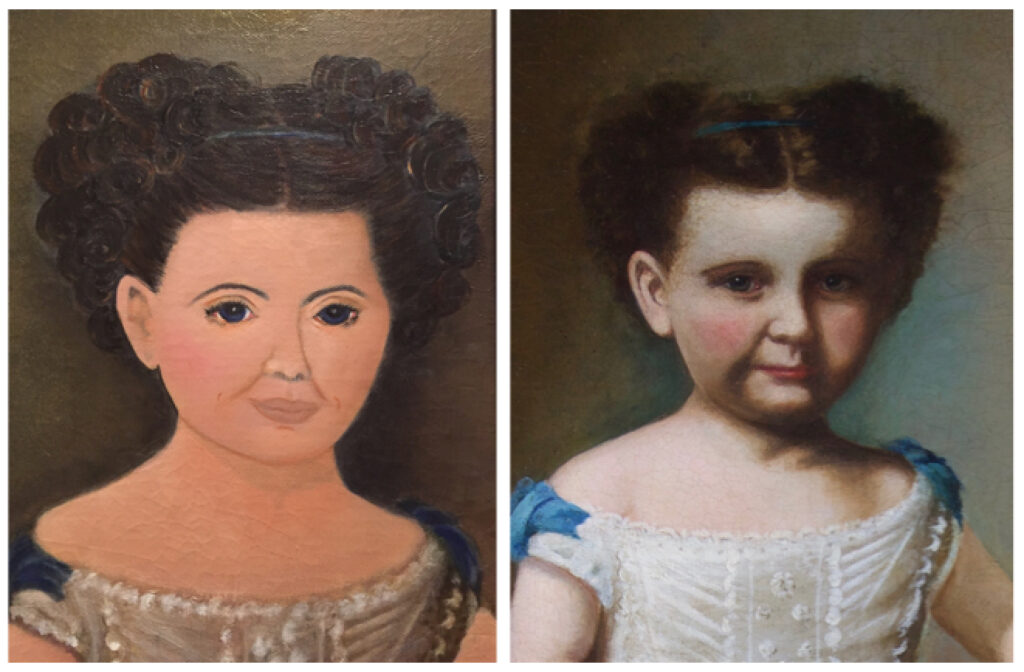
    • The sooner the right professional conservator is involved, the better the chances of saving both the artwork and the story it carries.

If you’re ever unsure what to do, stop, protect the piece from further harm, and call someone who does quality, professional work every day. If you know someone in this predicament, refer them to this quality help to get answers to their questions and to ally their fears: (FACL, 805 564 3438)

Discuss Your Questions With Fine Art Conservation Laboratories (FACL)

Fine Art Conservation Laboratories has been conserving paintings, murals, and historic artifacts for more than four decades—working with museums, historic sites, churches, public art programs, insurers, and families who simply don’t want to lose what matters to them.

If you’re dealing with a water-damaged painting, an old portrait that’s flaking, or artwork that has already been “helped” by an untrained restorer, we’re happy to talk it through with you.

Southern California, Utah, and general inquiries: 805-564-3438

• Las Vegas / regional disaster response: 805-748-0145

• Website:https://www.fineartconservationlab.com

A short phone call, some clear photos, and timely professional help can mean the difference between a total loss and a rescued heirloom—just as it did for the Manuel Dominguez portrait restoration at the Rancho San Pedro Dominguez Adobe in the Los Angeles area (Museum Dominguez Adobe).

Wide and Daughter's portrait boy Solomon Nunes Carvalho

Portrait of Mother (Engracia Dominguez) and Daughter (Reyes Dominguez)


Stay tuned, coming quickly, the restoration of Solomon Nunes Carvalho’s portrait of Manuel Dominguez’s wife and daughter… and their interesting story.

Other educational, entertaining videos about water-damaged paintings

https://www.fineartconservationlab.com/in-lab/restore-heirloom-paintings-treasured-but-worth-it/

https://www.fineartconservationlab.com/disaster-emergency-response/water-damaged-oil-painting-restoration/

https://www.fineartconservationlab.com/disaster-emergency-response/water-damaged-

How to save water-damaged artwork and heirlooms FACL blog post: https://www.fineartconservationlab.com/water-damage/save-water-damaged-artwork-heirlooms-expert-tips-for-los-angeles-ca/

Dominguez Museum: www.dominguezrancho.org

Facebook and Instagram: @dominguezrancho

Donation page for the Museum (specifically for 

conservation)

https://dominguezrancho.org/donate-dominguez-rancho/

Celeste Calabrisi-Hernandez

Executive Director

Dominguez Rancho Adobe Museum

18127 South Alameda Street

Rancho Dominguez, CA 90220

(310) 603 0088 Phone

(310) 603 0009 Fax

celeste.calabrisi@dominguezrancho.org

Syndication

Article Syndication Graphic.jpg

“Your blog post has been syndicated at ExpertClick.com”

Its a bit of a coup to get an article syndicated, and its certainly prestigious, as additional “proof” that the info and the author are considered far and wide authoritative and an expert in the field. This article was syndicated for USA national redistribution. So, enjoy and trust our content!!

This article has been syndicated at Expert Click

When something is published, usually by a news source, and is made available through different venues for redistribution then it is said to be syndicated. Publications that are syndicated are usually considered of value as being from an expert, educational, new worthy or valuable for wide popular interest. See syndication page at the renowned publicity site:ExpertClick.com

This website’s syndication included:

1) Included in the ExpertClick Press Room as a ‘press release.’ (different than a ‘news release’)

2) Included in the ‘Speaker Bureau Platform Page.’

3) Shown on the front page of ExpertClick, in rotation with other most recent posts.

4) Shown in the ‘News Release Results page.’

5) Included on optimized for searches on all my topics of expertise.

6) Shown via RSS linked from the Press Room. (A specific way news is actively distributed within the industry)

7) Shown in the full RSS feed from ExpertClick. (Another, different specific way news is actively distributed within the industry)

8) Syndicated to LexisNexis.com As of 2006, the company had the world’s largest electronic database for legal and public-records related information, distributor of academic content and expert opinion.

Posted in art restoration of family portraits, Disaster/Emergency Response, Historic Buildings - Construction Sites, Interesting Stories, Painting on canvas, Saving Public Art, Water Damage | Tagged , , | 2 Comments

Save Water-Damaged Artwork & Heirlooms: Expert Tips for Los Angeles Area

How to Save Water-Damaged Artwork and Heirlooms

When water-damaged artwork or treasured family heirlooms get soaked, stained, warped, or moldy, Los Angeles area homeowners often search for reliable help to save water-damaged artwork and heirlooms. Either right away after the damage — or even later after items have dried — it’s important to get expert help quickly.

INTRODUCTION — WHEN WATER DAMAGE THREATENS FAMILY HISTORY

When water-damaged artwork or treasured family heirlooms get soaked, stained, warped, or moldy, Los Angeles area homeowners often search for reliable help to save damaged artwork, restore heirlooms, and protect their family history. Either right away, after the damage or later… its important to get help even if items have dried out for awhile.

But remember, saving water-damaged artwork quickly prevents mold growth, staining, and distortion that can worsen within hours.

When water damage strikes – after people, pets, and the structure are safe – the real heartbreak begins when families discover that treasured collectibles or keepsakes have been damaged. You don’t need a major natural disaster to hit your neighborhood… sometimes this happens in surprising ways — even as simply as leaving a box of family memorabilia on the driveway during a move in, that gets hit after by the sprinkler… or maybe an unexpected downpour.

water damaged artwork restoration
Caption: Left on the driveway during a move and then hit later with the sprinkler.

These objects hold memories. They represent the people, places, and stories that define a family. Fine Art Conservation Laboratories helps to bring hope, relief, clarity of colors, and professional guidance for insurance issues — while preserving the artwork and the emotional history it carries.

How to Save Water-Damaged Artwork and Heirlooms
Water damage affects artwork differently depending on:
• Whether it was framed or unframed
• Whether it was in storage or on display
• What materials it was made of (canvas, paper, panel, mixed media)
• How long it stayed wet
• The type of water exposure (clean water, dirty water, sprinkler, flood, leak)
• Environmental conditions during and after the incident

If you’d like to talk to someone knowledgeable and expert, contact us to discuss your questions on saving and preserving any water damaged art or historically related items.

Email: FACLOfficeManager@gmail.com
 Phone: 805 564 3438
Also see: SaveYourStuff.com

TO DO TIPS — EMERGENCY CHECKLIST to Save Water Damaged Artwork & Family History Items – Here are the first steps to take when artwork or heirlooms get wet.

DO:
• Move artwork out of wet areas (if safe). Be hyper careful — wet items may fall apart!
• Keep artwork flat — never hung while wet.
• Increase airflow (fans in the room, not pointed directly at the art).
• Separate artworks so moisture cannot transfer.
• Call a professional conservator promptly.

DO NOT:
• Do not use a hair dryer, heater, or direct sunlight.
• Do not attempt to wipe or clean the artwork (attempts rarely improve a mark and often cause further damage).
• Do not soak, rinse, or use chemicals.
• Do not remove artwork from a frame if it resists.
• Do not press down warped or buckled areas.

  • Attempting do it yourself fixes on wet or damaged items — even gentle ones — can cause irreversible damage.

Save water damaged artwork and heirlooms – Fine Art Conservation Laboratories

Water Damage on an oil painting portrait before art preservation and restoration treatments and after treatments

HOW FACL SAVES WATER-DAMAGED ART
Our professional art conservation assistance is frequently requested by people looking for mold on painting treatment, flood damaged art repair, and professional art restoration after leaks. Our conservation treatments respect both the artwork and its emotional significance.
— Examination & Documentation
We evaluate all damage using magnification, UV, raking light, and scientific testing.
— Stabilization
We prevent additional paint loss, mold spread, distortion, or contamination.
— Controlled Drying
Using specialized techniques, we gently and evenly dry artworks to minimize warping. Sometimes we force dry specific items to prevent distortions or mold growth.
— Cleaning
We remove water marks, contaminants, tide lines, and residues using tailored cleaning systems.
— Structural Repairs
Includes addressing canvas distortions, panel warping, compromised stretchers, weakened supports, and failing adhesives.
— Inpainting (Only Where Needed)
Missing or damaged paint is carefully matched and restored — never overpainted.
— Protective Conservation
Conservation quality varnishes restore clarity of colors, depth of field in the composition, and long term protection.
Every step follows international conservation ethics and reversibility standards.

Los Angeles area clients often call us when water-damaged artwork begins to warp or show signs of mold.

VIDEO TESTIMONIAL — A FAMILY HEIRLOOM SAVED

INSURANCE, CLAIMS & DISASTER RESPONSE
We frequently work with:
• Insurance adjusters from insurance companies and independent adjusters
• individual owners
• Restoration contractors
• Emergency services teams
We can:
• Document damage for insurance claims (we come to your location)
• Provide professional condition reports with options and estimates
• Pick up and deliver items when needed
• Undertake conservation treatments and stabilization
• Offer temporary storage during home repairs or renovations
We do not:
• Appraise value
• Buy or sell art
• Insure your items (they remain on your policy)
Homeowners never need to navigate the claims process alone.

How Water Damaged Artwork Is Affected
If your artwork or family heirlooms have suffered water damage, don’t wait. Damage can worsen in hours — not weeks.
Fine Art Conservation Laboratories (FACL) — trusted for art restoration in the Los Angeles area, water damaged painting repair, and emergency art conservation services.
Trusted by homeowners, museums, cities, and public agencies.
 Call: (805) 564 3438
 Visit: Our capabilities
 Email: FACLOfficeManager@gmail.com

Our conservation team specializes in stabilizing, restoring and providing services for water-damaged artwork for homeowners across Los Angeles.

Virginia Panizzon and Scott M. Haskins and Veteran Art Conservators with decades of professional experience

Scott M. Haskins and Virginia Panizzon Veteran Art Conservators at Fine Art Conservation Laboratories.

FAQ — SAVE WATER-DAMAGED ART & HEIRLOOMS
1. Can water damaged artwork be saved?
Yes. Most water damaged paintings, prints, documents, and heirlooms can be stabilized and restored by a trained art conservator.
2. How quickly does mold begin to grow on artwork?
Mold can begin forming on wet or damp art within 4–48 hours, especially in warm humid environments.
3. Should I try to force-dry the artwork myself?
No. DIY drying can cause permanent warping, paint loss, or structural failure.
4. Does homeowners insurance cover water damaged art?
Often yes — especially if the damage resulted from a sudden or accidental leak. Some insurance companies require a ryder for water damage. FACL can provide documentation insurers require.
5. What if the artwork was damaged during a move?
Commercially shipped items often sit in warehouses, on docks, in containers where they get wet. Also, handling is often not careful and forklifts for heavy items often damage shipping crates. Accidents in storage containers and units are common. Once again, check both your home owner’s policy and the shipper’s insurance policy. Conservation treatments can often recover the piece when the insurance company declares the item a “total loss.”
5. Can you pick up the damaged items?
Yes. FACL provides pickup, delivery, and professional storage if you are in our regular service areas. Professional conservation ensures that saved water-damaged artwork is stabilized correctly so the condition is stopped and doesn’t get worse in the future. Call us to discuss 805 564 3438 or… if you know someone with these problems, they may be praying for help to find the right person to help them!

No one but fully trained professionals touch the artwork

WHY HOMEOWNERS TRUST FACL
You deserve a team with proven expertise — not guesswork.
Fine Art Conservation Laboratories has been entrusted with some of the most complex water damage conservation projects in the Western United States, including:
6,600 sq. ft. of water damaged murals — Los Angeles Produce Murals

350+ homeowner claims — Montecito mudslides & Woolsey Fire
A nationally acclaimed (water-logged) mural in Houston, Texas
Municipal, museum, and institutional emergency conservation
Scott M. Haskins is an internationally renowned, award winning author of the Save Your Stuff series of books for home preservation and disaster response for art.

Whether the artwork is one square foot or six thousand, homeowners receive the same museum quality care.

We are waiting for your call to discuss your concerns and questions!

or… if you know someone with these problems, they may be praying for help to find the right person to help them!

FACLOfficeManager@gmail.com
805 564 3437
Scott M. Haskins, Art Conservator
Virginia Panizzon, Art Conservator
Gena Dillon, Business Manager
Lindsey Geier, Office Manager


Syndication

icon of "content syndication"

“Your blog post has been syndicated at ExpertClick.com

Its a bit of a coup to get an article syndicated, and its certainly prestigious, as additional “proof” that the info and the author are considered far and wide authoritative and an expert in the field. This article was syndicated for USA national redistribution. What does it mean that this article is “syndicated”?

When something is published, usually by a news source, and is made available through different venues for redistribution then it is said to be syndicated. Publications that are syndicated are usually considered of value as being from an expert, educational, new worthy or valuable for wide popular interest. See syndication page at the renowned publicity site: https://www.expertclick.com

This website’s syndication included:
1) Included in the ExpertClick Press Room as a ‘press release.’ (different than a ‘news release’)
2) Included in the ‘Speaker Bureau Platform Page.’
3) Shown on the front page of ExpertClick, in rotation with other most recent posts.
4) Shown in the ‘News Release Results page.’
5) Included on optimized for searches on all my topics of expertise.
6) Shown via RSS linked from the Press Room. (A specific way news is actively distributed within the industry)
7) Shown in the full RSS feed from ExpertCick. (Another, different specific way news is actively distributed within the industry)
8) Syndicated to LexisNexis.com As of 2006, the company had the world’s largest electronic database for legal and public-records related information, distributor of academic content and expert opinion.

Posted in Water Damage | Tagged , | Leave a comment